Search This Blog

Thursday, November 29, 2018

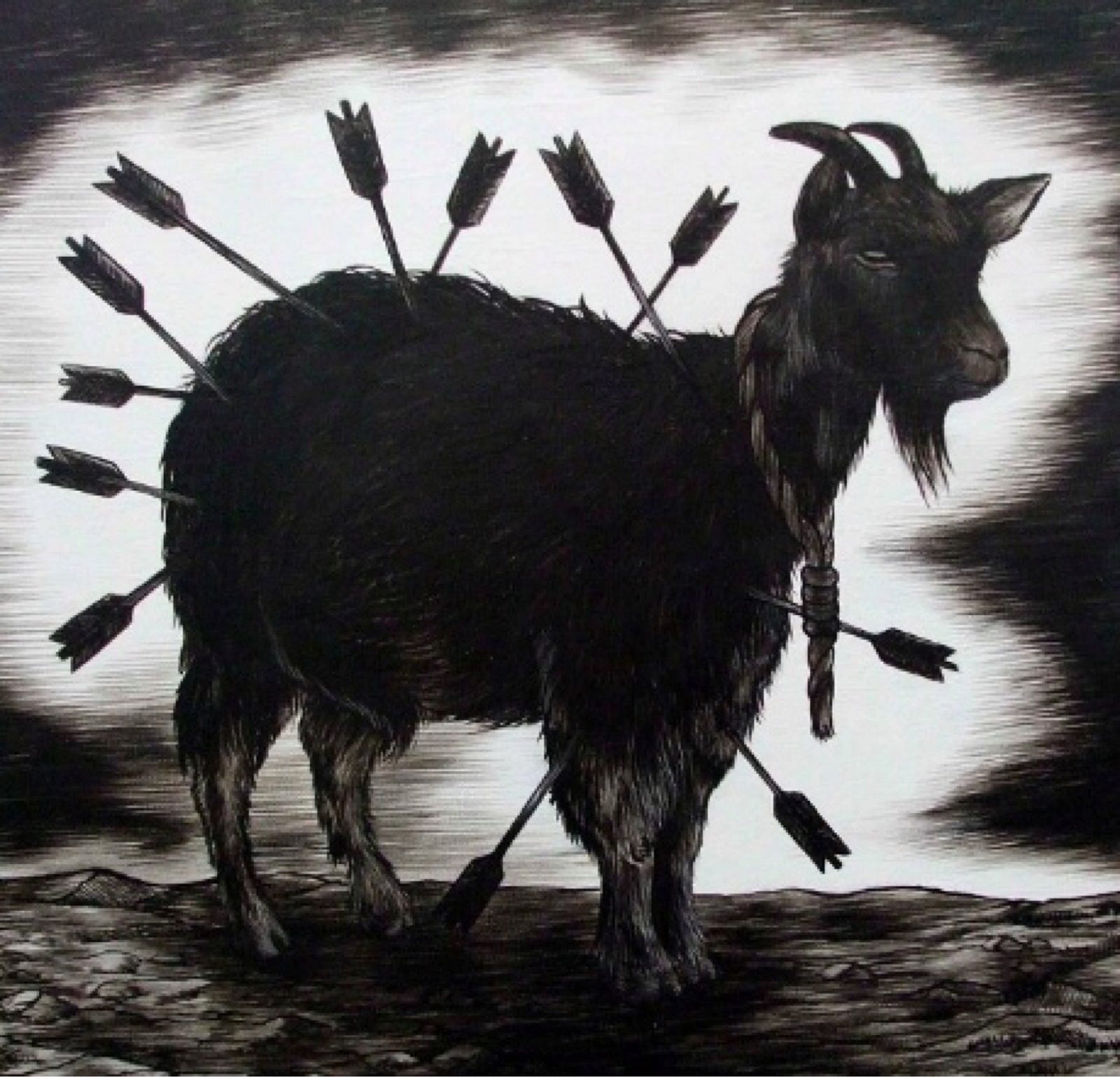
A Funeral Oration for C.S. Lewis

There has been a good deal of hand-wringing lately over the question of what we are to make of our own imperfect past. While there are undoubtedly many causes it will work well enough for me to recognize that in our current political climate, those of us who identify on the more "liberal" side of the political spectrum have had our consciences especially pricked both as we set our selves (quite rightly) in opposition to the current administration and as we (even more importantly) work to pay more attention to the voices and concerns of historically and socially marginalized groups within our society. One consequence of this sharpening of the conscience has been increased uneasiness with many of the thinkers, writers, and other historical figures who occupy positions of power and respect in contemporary society are accustomed to citing.

I suspect that you already know the phenomenon I am describing: Columbus enslaved Native Americans and introduced genocidal diseases to the Americas; many of the "founding fathers" were slave holders and, while there is much to be said in favor of Declaration of Independence, it is also true that Thomas Jefferson raped the enslaved Sally Hemmings; Martin Luther started the protestant reformation, challenged corruption and bad doctrine within the Roman Catholic church and ended his life a vicious antisemite; in my own Anabaptist tradition, the beginnings of the movement included a murderous, polygamous, apocalyptic cult, and our most famous contemporary theologian—John Howard Yoder—sexually manipulated and assaulted women. The whole history of patriarchy in the global west is such that it is rare to find even a female author (never mind a male author) of more than two hundred years whose writing is not tainted by it. Conservative Christians are quick to point out that homosexuality was condemned by the church for two thousand years* but have little to say about the fact that the church was just as wrong about slavery for very nearly the same amount of time. If you want to find serious, and important fault with a thinker, philosopher, or author you will have little trouble doing so. Plato believed that slavery was natural; Aristotle thought democracy foolish; Augustine taught that men were inherently superior to women; Dante and Aquinas shared the view that gay men experienced a perversion of natural love (and theirs were some of the less homophobic views of the time). The list could go on and on. If "western" history can be represented as a bridge from the past to the present, it is evidently a bridge built of rotten planks. I have decided to refer to this process of pulling back the sheet on the moral failings of historical and religious figures as counter-hagiography: the process of revoking sainthood**.

The counter-hagiographic process may be usefully divided into two stages, one necessary and the other consequential. The first stage is counter-hagiography proper: the process of discovering, recognizing, and promulgating the failings of a given subject. The second stage, while not logically consequent to the first, is very much entailed in it for other reasons: it involves stepping back from the subject, disavowing their failings, and either not citing them or, at most, citing them with an attendant disclaimer in our work.

Now I do not here mean to suggest that this sharpened conscience is somehow a bad thing. Quite the contrary, I have seen much that is good coming from it. First, the whole counter-hagiographic impulse has, first and foremost, caused many of us who would not otherwise have done so, to seek out and take some first steps towards a fuller exploration of the human experience by studying and learning under voices "from the margins". At the risk of engaging in to banal a simile, developing a sharper conscience is somewhat like developing a more delicate palate. The discovery of subtleties of flavor drives any connoisseur to broaden her experience of food and drink. In the same way, discovering a greater degree of moral complexity (often based on a dawning awareness of the ways in which possession of power has blinded us to the experience and perspective of those with less power) will motivate a person to broaden their sources of learning. Second, a more delicate conscience is in many ways an integral part of the whole process of human improvement (sanctification for those of us who are Christians). So long as we remain blind to the faults of our saints, so long as we refuse to engage in counter-hagiography, we must also remain blind to those faults when they appear in our own selves. Until I can recognized Jefferson's racism, I am far less likely to recognized the way and degree to which white supremacist thinking has infected my own life, formation, and thinking. The process of naming and renouncing our own distortions and confusions is difficult enough, how can we hope to accomplish it if we remain obstinately unwilling to recognize them in our heroes? Third, counter-hagiography is utterly necessary if we want to have any hope of an accurate history. Whether we are talking about secular or religious history, resistance to counter-hagiography must inevitably result in distorting our knowledge of the past. While the job of history often and properly ends with high and complex conclusions and speculation—the patterns, structures, and forces which guide our thoughts, ideas, and actions and much besides—it always begins with straightforward investigation into the basic facts of the past. The counter-hagiographic project is necessary for the discovery and dissemination of those facts which often prove to embarrassing to power to have been well known or well incorporated into our analysis. Finally a practical level counter-hagiography critically undermines the fascist/totalitarian desire to construct a false mythological national past in order to inculcate a motivating nostalgia.

What does this mean for our now dethroned heroes? I am afraid that my first response is that they must die. Just as writers of fiction are encouraged to "kill your darlings" if they want to avoid having their stories become either bathetic or banal, we who want to write lives of complexity, poignancy, and nuance will need to bury the very heroes who may well have started us on this journey. This experience is sharpest for me in my relationship to C.S. Lewis and so, if you will indulge me, I will attempt to undertake it here.

I have no shortage of personal praise for Lewis. It was in his fiction that I first encountered, in Aslan, an image of Jesus with whom I could imagine a relationship that was more than transactional. It was Lewis who taught me that relational knowing (looking along) is a different thing from observational knowing (looking at). In The Great Divorce Lewis pried apart the first bars of my evangelicalism; in Till We Have Faces he introduced me to mystery as power deeper than mere certainty; A Grief Observed has been, to me, a balm in times when doubt gives rise to fear, and The Discarded Image breathed living enchantment back into a world which was turning to a thing of cold gears and harsh
numbers.


You see, but of course you already know, how difficult this is. Even in trying to bury Lewis I find that I must praise him. There is, I believe—I must believe—a time for that, but I have begun too early. While the above, and more, is true. The following is true as well: C.S. Lewis' writing about women and the relationships between the sexes often reflects a troubling patriarchy and occasional outright misogyny; Lewis did much in his generation to further baptize the cause of Christian violence; he was very much a "man of his time and place" when it came to the way he spoke and wrote about peoples outside of the western tradition, his writing is liberally sprinkled with terms like savage, barbarian, redskin and other dehumanizing epithets—one winces reading many of the passages he wrote even against white colonialism due to his terminology and condescension; the most that could be said of Lewis on the subject of LGB persons is that he was not as bad as his contemporaries and that he worked to withhold judgement due to the fact that their experience was apparently opaque to his imagination.

This last point is well worth an extra paragraph since I suspect that exploring it may help to clarify the counter-hagiographic project. Beginning with the urge to praise my subject, I notice that Lewis' views on homosexuality were several decades ahead of their time. Lewis abstained from public comment on gay sex in anything but the vaguest terms on the grounds that he felt he had no right to condemn acts which he felt no temptation towards; he anticipated the celibate gay movement and expressed sympathy in his private letters for the idea that lesbian and gay folks might have a particular gift to offer the world as a result of their orientation. One expects that he would have been more at home in the company of contemporary "side B" Christians—who believe that God affirms their identity as LGBT Christians—than with the more fundamentalist "side X" types who tell LGBT Christians to deny their identities and often blatantly and explicitly denigrate and devalue them. If C.S. Lewis is to be graded on the curve and is set against his own contemporaries, it would be unfair to award him a grade lower than B+ on the subject of LGBT Christianity; but grading on a scale is one of the tools for escaping counter-hagiography. Grading on a scale is not a mistake in and of itself, but I am afraid that those of us determined to see the counter-hagiographic project through must resolutely lock it away until the funeral rights are complete—the temptation to use the sliding scale to keep our heroes alive is far too strong. As a twenty first century US citizen I cannot avoid the conclusion that Lewis' views have been used by an unholy alliance of Republicans and white Evangelicals to propagate a homophobic political programme. As a Christian who is convinced that God affirms lesbian and gay relationships in the same way as straight relationships I cannot avoid the conclusion that Lewis was wrong about this and that his very wrongness has had damaging impacts on vulnerable persons. A water-sctrychnine solution may well have some positive effect on a glass of undiluted poison but that does not recommend it as an aperitif, nor will it prevent your becoming sick if you drink it as one.

This is what I propose must be done to our heroes, academic, theological, philosophical, and historical; and not our heroes only but also our language, our treasured metaphors, and our schools of thought. I have heard rumblings recently—which make me uncomfortable but are more likely to have merit than not for all of that—that the imperial language in our Christianity—King, Lord, Prince, Kingdom of Heaven etc...—justifies and reinforces an imperial and colonial theology among white Christians. Counter-hagiography will remorselessly demand the death of each and every one of its subjects. And I must urge you (as I urge myself) not to become complacent in this project. Death comes for all people and (if modern scientists are to be believed) it comes for the whole of the universe. All must end in cold and dark as as planets degenerate into their suns and the suns burn out. The heat death of our universe stands as the final consummation. As we dethrone our monarchs and bury our heroes, we will surely turn and discover replacements for them. That is to the good; we will likely focus on heroes and prophets who spoke out against the sins for which we buried the last crop. But can we expect that they will not have sins of their own? If Crenshaw's theory of intersectionality has taught us anything—and I hope that it has taught us a great deal—it has taught us that systems of oppression are vast and intertwined. J. K. Rowling seems to be transphobic. The writer who first taught us to see the veins of white supremacy in our old heroes may well turn out to be infected with liberal colonialism. J. K. Rowling may turn out to be transphobic. The LGBT activist may yet be an abelist, or might indulge regularly in the language of colonialism. The Muslim author you just discovered may turn out to be a homophobe. Christ and Crenshaw both call us to the highest of standards: Perfect love of all persons. Of course they are joined in that by a great many thinkers, prophets, and dreamers throughout the history of humanity—thinkers whom we must inevitably bury as they fail to have lived up to the ideals they professed.

I realize that this project can become as uncomfortable we who are political and religious "progressives" as it already is for our conservative and reactionary siblings. It is great fun (and I think very much necessary) to tear down monuments to confederate generals; it may well be our duty to one day tear down the Jefferson memorial; at the base of the Lincoln memorial are inscribed Lincoln's commitment to retaining slavery in the south if that would only have avoided the civil war. For that and for his crimes against Native Americans, we may one day have to bring down the monument from which Dr. King declared his dream. I do not know that it will ever come to that, in fact I know that I have neither the wisdom nor the conscience to even attempt such a determination.

But I fear that I am straying into a equivalence which I must avoid at all costs. Of course, all equivalences are finally false, but I do not want to allow any space at all for some reader to conclude from these rites that all our saints and heroes are equally infected and therefore equally laudable—they are not. The fact that each of our heroes must, in some respect, turn out to have been villains does not speak to the critical question of degree. Jefferson Davis and Abraham Lincoln may both have been racists infected with the poison of white supremacy, but Jefferson Davis was nonetheless far worse than Abraham Lincoln. Strychnine is deadly, even in a water solution, but I would rather it be diluted all the same. A gangrenous limb has got to be removed whether it shows only the faintest signs of infection or has rotted away almost entirely—there is no one point at which we can safely declare an end to counter-hagiography.

And so the saints and sinners are buried together and, if we have been careful, our own prejudices and sins are buried with them. We have found their faults; we have ruthlessly pried open their, and our, capitulation to the Powers and Authorities which hate and oppress humanity. The king is dead and kingship with him, and we find that we ourselves have had to die. We cannot stand above this mass grave—one of the first lessons of counter-hagiography has always been to bury that in ourselves which we first saw reflected in the object of our endeavors—we must descend into its depths, our own thought patterns too must die.

So far as I can tell, it is here that Virgil turns back and I can be led only be Beatrice. For me, the journey past this point of death is informed more by what I believe to be true than by what I can argue from shared premises and logical consequent. To say that the path forward is not based on logic is not, of course, to say that it is anti-rational or illogical, only that it is not directly informed by logic but by relationship, mythopoeia, and is structured in the idiom of my own Christian faith. Still, it may be that others have suggested that there may be a path here. Some poets, a few naturalists, and some story tellers do speak of resurrection.

Part 2 - On the Resurrection of the Dead


I FLED Him, down the nights and down the days;
I fled Him, down the arches of the years;
I fled Him, down the labyrinthine ways
Of my own mind; and in the mist of tears
I hid from Him, and under running laughter.
Up vistaed hopes I sped;
And shot, precipitated,
Adown Titanic glooms of chasmed fears,
From those strong Feet that followed, followed after.

From The Hound of Heaven by Francis Thompson


*I would argue that there are important exceptions to this claim and that it rests on an anachronistic application of the modern concept "homosexuality" but the fact remains that people whom we would currently describe as "LGB" have been treated very badly by the church for most of the church's history.

** I am using/coining the term counter-hagiography in a non-theological sense.

Friday, November 16, 2018

A Christian Defense of Intersex Persons

Image result for intersex youth


I frequently recommend Megan DeFranza's brilliant book Sex Difference in Christian Theology: Male, Female, and Intersex in the Image of God. It is a phenomenally good analysis of the subjects of sex and gender, and it provides a solid historical overview and a brilliant theological analysis and exegesis of the Bible's treatment of the topics. DeFranza's analysis includes, among other things, an few bits of exegesis—most notably her exploration of the Adam and the Eve in Genesis 1-3 as progenitors of human diversity rather than normative archetypes—and historical context—the six-seven different genders acknowledged by second-temple Rabbis—which I regularly include in my Christian defense of the gender identities of trans persons. While I very much stand by my usage of these arguments, I was convicted recently that in my use of DeFranza's book I have been guilty of a particularly damaging sin. Specifically I have been guilty of treating Intersex persons and the research which arose out of concern for topics and attitudes which have oppressed them as mere means (and not as ends in themselves) for the defense of other (most often transgender) people.

That is not to say that the Christian defense of trans people is in any way a bad thing; much to the contrary, I believe it a Christian's duty to defend the dignity and gender identities of our trans friends, family, and neighbors. But that duty does not grant any sort of licence to treat another population as mere means to that good end. The sin was not one of commission but one of omission. While using DeFranza's work to defend the identities of trans people, I did not use them to defend or really even specifically mention, the very real concerns of Intersex people. I hope to do correct that omission here.

For those who are not aware, Intersex people are people whose bodies do not fully conform to the more typical patterns which we (and most modern societies) use to assign people to one of two sexes (female or male). Numbers are hard to pin down because there are a lot of different ways that a person can be intersex and there are ongoing disagreements about what "counts" as an intersex condition so I have seen everything from 1 in 2000 to 2% (1 in 50) depending on who is counting and what degree of variation the counter allows for.

There are, so far as I know, two specific areas of concern wherein intersex people most frequently encounter, and are subject to, injustice. The first area of concern is simple recognition of their existence not as defective iterations of males or females, men or women, but as intersex persons who may be male, may be female, may be another sex, another gender, none, or both. That is to say the first area of concern has to do with recognizing the existence and dignity of intersex persons qua intersex. The second area of particular concern for intersex people has grown out of the intersection of the first area with technological development in the field of medicine. Because western society is generally uncomfortable with facts and events which complicate the categories we use to understand our world, it has become almost standard practice for doctors to surgically intervene when healthy intersex children are born and conduct surgeries on them in order to make their bodies conform to the more typical male or female pattern. Now, because sex is determined by more than just a person's genitals (some intersex people have fairly typically male external genitalia, some have typically female external genitalia, while some have external genitalia with is ambiguous) this is not a case of "correcting" a person's genitalia to conform to what they "really" are (what the person "really" is is an intersex person in any case). These surgeries which are often not at all medically necessary introduce all sorts of horrendous complications into the lives of these intersex people. The stories about this are heartbreaking and, rather than relate them myself I will encourage you to check out the documentary Intersex and Faith or to hop on Youtube and watch one of the many interviews and documentaries there. Intersex activists have made the claim that these surgeries, and the treatments which often accompany them, amount to genital mutilation and something like involuntary child abuse.

Now, working backwards through these two areas of concern, it strikes me that there is no reason why a Christian of almost any theological bent should not join in the efforts of intersex activists to end medically unnecessary surgeries on infants and children. The obvious alternative—recommended by many intersex activists—is to hold off on medically unnecessary surgical manipulation of a person's primary and secondary sex characteristics until they are old enough make an informed decision and let their own wishes be known.

I said just now that there is no reason that a Christian should not support ending these unnecessary surgeries and treatments. It would have been more accurate to say that there is no justification. There are, unfortunately, several reasons that some Christians do oppose these efforts; it is just that their reasons are not reasonable. The primary reason—I suspect—that a theologically conservative Christian might support the continued implementation of infant genital "modification" surgeries grows directly out of the first area of concern where intersex people encounter injustice: preservation of the "gender binary". Theologically conservative Christians are, despite a paucity of Biblical support for this view, often deeply wedded to the idea that sex is a binary category and that all people must be, in some real way, finally either female or male. While this commitment on their part does not logically demand that they support genital "modification" surgery in intersex infants since those intersex children may well grow up to identify with one or the other of the binary options, it does entail a profound discomfort with the ongoing ambiguity which is represented in a person whose body is not "clearly" male or female. Effectively, some theologically conservative Christians (as well as some Christians of other theological stripes) may be tempted to support genital modification surgeries on intersex infants in order to assuage their own emotional discomfort with the existence of those infants as intersex individuals. Thought they may provide other justifications (each of which should each be analyzed and responded to on its own merits, I am not supporting the use of bulverism here) it strikes me as rather likely that their motivation has to do with a desire to remain in comfortable denial about the fact that the taxonomy we have labeled "physical sex" is far more nuanced and complex than they want it to be and they are thus willing that these surgeries should be performed despite the negative consequences such "treatments" will have on the intersex children themselves. Once more, this is my hypothesis for why some theologically conservative Christians may support genital surgery on intersex infants despite the fact that there is no compelling Biblical or theological case that they ought to. There are other possibilities, but if I am at all correct in this then it is evident that Christian opposition to intersex people in the second area of concern derives primarily from Christian opposition to intersex people in the first area of concern: contemporary theologically conservative Christians, together with many other people in contemporary Western society, harbor a deep discomfort towards the existence of people who problematize their neat biological taxonomies.


Image result for scapegoat
Intersex people can become the scapegoats of people who fear uncertainty
The question (a philosophical one) which is at the heart of both the intersex non-affirming Christian's concern and the first area of concern for intersex folks may be summarized as follows: "Are female and male the only real or final sexes which can possibly be true of human beings?" Here there are some interpretive and theological arguments which are sometimes used to justify answering in the positive and denying that there are can be anything beyond male and female sexes. The first thing to note though, is that our current understanding of biology actually points towards a negative response, so that, despite what they will often claim, "modern science" actually counts against the case of the non-affirming Christians—their whole case must rest on a fideistic reliance on their theological argument. The process of determining a human person's sex on a biological level is a complex one which involves factors beyond that person's genotype (their "sex" chromosomes whether XX, XY, XXY, XYY, XO, or some other combination) and phenotype (the shape their body takes on) and, while most people sort fairly easily into one of two groups, intersex people are specifically those people who do not fit neatly into either. Factors like a person's genes, hormone levels, and genitalia are all more complex that a simple binary but in order for a person to be determined typically female or male each of them must point rather unambiguously in a single direction and that direction needs to correspond to the direction that each of the other's is pointing. If your genes point in a typically male direction (XY) and you hormone levels do as well (you have relatively high levels of androgens like testosterone) but your genetalia and eventual "secondary sex characteristics" point in a typically female direction, you are in a situation which a simplistic "male and female only" taxonomy of sex is unable to handle.

So the biological case is all in favor of recognizing that a binary taxonomy of sex is insufficient to describe the totality of people who actually exist in the world. But what is the theological argument which intersex non-affirming Christians cling to? It comes down to two claims: the first (which turns out to be false) is that the Bible only mentions two genders: "male" and "female"; while the second is that the Genesis account chronicles the creation of "man and woman" as "very good". As regards the first claim, Megan DeFranza has already established pretty conclusively that second temple Jewish thinkers had six or seven item list of possible sexes and that Jesus seems to be referencing people on this list when, in Matthew 19, he refers to a number of "types" of eunuch. So the claim that "male" and "female" are the only sexes which appear in the Bible is flat wrong.

The second claim is one I find especially objectionable just because it presents a premise "God declared 'very good' the creation of a man and a woman" as equivalent to the conclusion "Male and female are the only two sexes which God acknowledges as good". Has it never occurred to them that Genesis contains no explicit divine recommendation of ice cream sundaes or roller derby? Still it could be pressed that the declaration of the Adam (male/man) and the Eve (female/woman) as "very good" implies that it is "very good" for the total diversity of the human experience to be confined to those two sexes—but I don't see how such a claim could be sustained. As DeFranza has pointed out, the creation account in Genesis follows the pattern of things being created and declared good. Those things constitute several of the rough taxonomies with which we understand the world: night and day; dry land from sea; fish that swim, birds that fly, and animals that crawls along the ground etc... . In each case, the taxonomies Genesis uses are perfectly appropriate for suggesting "all of the stuff in the relevant category" but if picked apart and taken in the restrictive sense that the intersex non-affirming Christian wants to take the Adam and the Eve creation account, would contain gaping holes. The same argument which wants to pronounce sexes beyond "female" and "male" as "not good" must then turn around to similarly decry dawn and twilight (which are neither day nor night), marshes (which are neither dry ground nor sea), amphibians, penguins, and platypuses (which are not swimming fish, flying birds, or land-crawling mammals). Clearly the reading of Genesis which restricts "goodness" to those things which can be pedantically sorted into the categories explicitly described in the creation account is a poor reading of the text. DeFranza suggests that a far more robust reading of the Genesis account would be one which understands the categories used in that text to be representative of the total diversity which is associated with the list. Thus when God declares day and night good we are to understand that the whole 24 hour rhythm is a good creation of God; when God declares the land and the sea good we are to understand that all manner of terrain is a good creation of God; when God declares the various types of animal good we are to claim that the whole diversity of living beings is a good creation of God, and when God declares the Adam and the Eve "very good" we are to understand that the full diversity of human sex and gender is a very good creation of God.

Image result for platypus
But seriously, how could they not be good?
Now while I worked on correcting the sinful error I had made in omitting a recognition (and attendant defense) of intersex people from my work in defense of LGB relationships or of the gender identities of transgender people, I noticed that the sin I had committed or participated in has already had its effects compounded. I am not suggesting that my own small contribution to this much larger conversation has, on its own, had some sort of out sized effect on the spiritual and social well being of intersex persons, rather I notice that my own error is one which has frequently (though not universally) been matched by others who have engaged in this arena. Intersex people and the great variety of intersex conditions have been cited frequently by those of us who are affirming of trans identities as a fact (because the existence of Intersex persons is certainly a fact) which undermines the typically non-affirming claims that gender and sex are ontologically binary. And that argument is valid. The problem is that in presenting the argument, in using the existence of intersex people merely as a tool in our defense of LGBT folks without also recognizing and—where necessary—defending the dignity of intersex people themselves, without also including a full argument in defense of intersex individuals, we have associated intersex people with the rest of the LGBT community in the minds of people who are not predisposed to affirm the LGBT community and then failed to support them as persons themselves. In effect we have dragged intersex people into the battle and then abandoned them to the "mercy" of people who feel threatened. We need to face the fact that intersex people might have received a far more supportive and welcome response from theologically conservative Christians if they had not been associated in those Christians' minds with the rest of the LGBTQI community. It is never right to use a person as a means to any ends, even good ends, if you are not at the same time, treating that person as an end in themselves.

On a final note. I want to make two things clear:

  1. I know that there is much more to be said about intersex people: that they are not "a product of the fall"; that, in their particularities, they can help those of us who are not intersex to better understand ourselves, our world, and God; that the intersex experience is far from homogenous—it is diverse and complex, and much more. 
  2. I am almost certain to have got some things wrong here and I would appreciate any corrections or suggestions on my analysis or understanding of the facts.

Most of the information about intersex people in this piece comes from one of the following sources which I strongly encourage you to read to become more acquainted with intersex people, their awesomeness and their concerns:

Monday, October 29, 2018

Let's think about Reformation Day Differently This Year.

This post contains quotes and references to extremist hate speech. I have provided these for the purpose of making the point that they (and what happened as a result) are evil.

This last Saturday (Shabbat) saw one of the most violent, blatant, and bloody acts of antisemitism that has taken place in the United States in some time with the murder of eleven congregants at the Tree of Life synagogue in Pittsburgh. That is not at all to say that the US has been, in any way, free from the stain of that hate at any point in its history, but to acknowledge that a particular atrocity has been committed—an atrocity which ought to elicit renewed reflection on the part of those of us in the Christian tradition. Co-incidentally this coming Wednesday is often celebrated among Protestants in this country as Reformation Day. October 31st was chosen because it is the putative anniversary of the moment Martin Luther nailed his 95 theses to the door of Wittenburg cathedral and thus works as a beginning point for the Protestant reformation.

The near coincidence of these dates should be uncomfortable.

While there is much that I appreciate and even admire about the teachings and thoughts of Martin Luther, the fact of the matter is that he was virulently antisemitic and that the legacy of his public andThe Jews and their Lies
published antisemitism fueled the gas chambers eighty years ago and persisted through to haunt the gunman last week. It did not begin with Luther, he may even have resisted its influence on his soul for a time, but he is finally and terribly complicit in promulgating and amplifying it. Here are just a few quotes from his demoniac work entitled


I had made up my mind to write no more either about the Jews or against them. But since I learned that these miserable and accursed people do not cease to lure to themselves even us, that is, the Christians, I have published this little book, so that I might be found among those who opposed such poisonous activities of the Jews who warned the Christians to be on their guard against them. I would not have believed that a Christian could be duped by the Jews into taking their exile and wretchedness upon himself. 
However, the devil is the god of the world, and wherever God's word is absent he has an easy task, not only with the weak but also with the strong. May God help us. Amen.
What shall we Christians do with this rejected and condemned people, the Jews? Since they live among us, we dare not tolerate their conduct, now that we are aware of their lying and reviling and blaspheming. If we do, we become sharers in their lies, cursing and blasphemy. Thus we cannot extinguish the unquenchable fire of divine wrath, of which the prophets speak, nor can we convert the Jews. With prayer and the fear of God we must practice a sharp mercy to see whether we might save at least a few from the glowing flames. We dare not avenge ourselves. Vengeance a thousand times worse than we could wish them already has them by the throat. I shall give you my sincere advice: 
First to set fire to their synagogues or schools and to bury and cover with dirt whatever will not burn, so that no man will ever again see a stone or cinder of them. This is to be done in honor of our Lord and of Christendom, so that God might see that we are Christians, and do not condone or knowingly tolerate such public lying, cursing, and blaspheming of his Son and of his Christians. For whatever we tolerated in the past unknowingly ­ and I myself was unaware of it ­ will be pardoned by God. But if we, now that we are informed, were to protect and shield such a house for the Jews, existing right before our very nose, in which they lie about, blaspheme, curse, vilify, and defame Christ and us (as was heard above), it would be the same as if we were doing all this and even worse ourselves, as we very well know.
Second, I advise that their houses also be razed and destroyed. For they pursue in them the same aims as in their synagogues. Instead they might be lodged under a roof or in a barn, like the gypsies. This will bring home to them that they are not masters in our country, as they boast, but that they are living in exile and in captivity, as they incessantly wail and lament about us before God. 
Third, I advise that all their prayer books and Talmudic writings, in which such idolatry, lies, cursing and blasphemy are taught, be taken from them. (remainder omitted) 
Fourth, I advise that their rabbis be forbidden to teach henceforth on pain of loss of life and limb. For they have justly forfeited the right to such an office by holding the poor Jews captive with the saying of Moses (Deuteronomy 17 [:10 ff.]) in which he commands them to obey their teachers on penalty of death, although Moses clearly adds: "what they teach you in accord with the law of the Lord." Those villains ignore that. They wantonly employ the poor people's obedience contrary to the law of the Lord and infuse them with this poison, cursing, and blasphemy. In the same way the pope also held us captive with the declaration in Matthew 16 {:18], "You are Peter," etc, inducing us to believe all the lies and deceptions that issued from his devilish mind. He did not teach in accord with the word of God, and therefore he forfeited the right to teach 
Fifth, I advise that safe­conduct on the highways be abolished completely for the Jews. For they have no business in the countryside, since they are not lords, officials, tradesmen, or the like. Let they stay at home. (...remainder omitted). 
Sixth, I advise that usury be prohibited to them, and that all cash and treasure of silver and gold be taken from them and put aside for safekeeping. The reason for such a measure is that, as said above, they have no other means of earning a livelihood than usury, and by it they have stolen and robbed from us all they possess. Such money should now be used in no other way than the following: Whenever a Jew is sincerely converted, he should be handed one hundred, two hundred, or three hundred florins, as personal circumstances may suggest. With this he could set himself up in some occupation for the support of his poor wife and children, and the maintenance of the old or feeble. For such evil gains are cursed if they are not put to use with God's blessing in a good and worthy cause. 
Seventh, I commend putting a flail, an ax, a hoe, a spade, a distaff, or a spindle into the hands of young, strong Jews and Jewesses and letting them earn their bread in the sweat of their brow, as was imposed on the children of Adam (Gen 3[:19]}. For it is not fitting that they should let us accursed Goyim toil in the sweat of our faces while they, the holy people, idle away their time behind the stove, feasting and farting, and on top of all, boasting blasphemously of their lordship over the Christians by means of our sweat. No, one should toss out these lazy rogues by the seat of their pants.
- Martin Luther 

Unfortunately, this evil was not contained as a single aberrant view of Luther's; it persisted in the mainstream of Protestantism and was cited by the Nazis during the holocaust and beyond. In fact a deeply troubling complicity with antisemitism has existed within Christian theology for almost the whole of our existence; notice that Luther quoted the Bible in support of his evil. Luther's demoniac views have served among protestants (Lutheran and otherwise) as warrant for our own acts of prejudice and violence at lest as often as they have served as a warning of how easy it is for leaders who see some things clearly to be catastrophically blinded by prejudice, bigotry, and hatred.

As Protestants spend this week thinking about the reformation, we need to think not just about the reasons for the historical process we call "the reformation" we need to be thinking about what reformation needs to look like today. It is to late for Christianity to avoid complicity in the horrors of the shooting at Tree of Life; the culture we worked to shape shaped the man who selected an AR-15 "to kill Jews". If we want to have any hope that this act will be the last of its kind, we will have to recognized the story our own tradition has told and then work to tell a new and better story, we will have to continue to reform. C.S. Lewis recognized this in The Four Loves:

It will be noticed that the sort of love I have been describing [love which can become demoniac] and all its ingredients, can be for something other than a country: for a school, a regiment, a great family, or a class... All the same criticisms will still apply. It can also be felt for bodies that claim more that a natural affection: for a Church or (alas) a party in a Church, or for a religious order. This terrible subject would require a book unto itself. If ever the book which I am not going to write is written it must be the full confession by Christendom of Christendom's specific contribution to the sum of human cruelty and treachery. Large areas of "the World" will not hear us till be have publicly disowned much of our past. Why should they? We have shouted the name of Christ and enacted the service of Moloch.
- C.S. Lewis

That is a big process, indeed we will probably have to spend the rest of our lives acknowledging and confessing, but I have a recommendation for this particular reformation day. This year, think about not celebrating Martin Luther. This year, how about we spend reformation day recognizing the failings of the reformation and the ways in which we still need to be re-formed. The positive spiritual insights of Luther will not go away just because we work to recognized the poison with which he mixed them. The thing is, unless we point that poison out, unless we identify it for the evil that it is, no sip of reformation theology will avoid the risk of spreading plague. Remember that we are resurrection people. To return to C.S. Lewis: "Nothing, not even the best and noblest, can go on as it now is. Nothing, not even what is lowest and most bestial, will not be raised again if it submits to death."

Saturday, July 28, 2018

Solus Jesus Proposes a Way Forward in an Increasingly Post-Evangelical World

Having finished Solus Jesus: A Theology of Resistance I found myself feeling massively encouraged about the future of post-Evangelical Christianity in the United States. Ken Wilson​ and Emily Swan​ have written a book which focuses far more on how to move forward than it does on what was wrong with the way "we used to think about things". Not that there isn't anything wrong with doing the latter (critique—prophetic or otherwise—is important), but it is just as important to start actually going somewhere once we decide to leave behind what we have found to be broken.

For many ex-Evangelicals, the process of breaking ties with American White Evangelicalism is two-fold: there is the breaking away from and also the clinging to. The "breaking away from" part is pretty straight forward and much discussed these days. White Evangelicalism in the United States has (despite the heroic efforts of many outstanding Christians) aligned itself with forces of authoritarianism, racism, and exclusion, forces that (to borrow from this book's observations) align more often with oppression rather than with the oppressed. All this is well documented and properly discussed. But it is never enough to know that you are not part of a thing, and many of us who have left Evangelicalism remain deeply committed to Jesus and his Way. The first great joy of Solus Jesus for me is that it proposes a vision of what next might look like for us—more than being a book which calls us to leave or fix the broken thing, it is a vision for what is (and I will say always was) better.

This is a book I have been looking forward to since I first heard that Ken Wilson and Emily Swan, the co-pastors of Blue Ocean Faith Ann Arbor, were working on it. I have already done some writing on how the concept of Solus Jesus has been of significant benefit to my theology and life as a whole, so it should not be surprising to hear that I was thrilled. There is a LOT going on in this book. It certainly did not disappoint, but it did surprise me—in a remarkably encouraging way.

When I sat down to read Solus Jesus: A Theology of Resistance, I was expecting an extended explanation and defense of what Blue Ocean Faith people mean when they talk about the concept. As someone who has been hanging around the fringes of the Blue Ocean Faith community (and cheering it on) for a while now, I was already familiar with the idea in broad terms. Essentially Solus Jesus is a riff on, and reaction to, the reformation credo "Sola Scriptura". Inspired by Phyllis Tickle's suggestion that the Church, guided by the Holy Spirit, will begin to work in a fresh paradigm every five hundred years or so, Solus Jesus recommends a decentering of the Bible as a source of certainty and instead placing our confidence in the person of Jesus Christ. Ken Wilson and Emily Swan are both post-Evangelicals who were put through the ringer by the Evangelical "machine" over the issue of  full LGBTQ+ inclusion (Ken Wilson tells the story of this in his previous book A Letter to My Congregation). It was probably for that reason, as well as the general timeliness of the subject, that I expected this book to be that defense and explanation.

It turns out that the vision Swan and Wilson had for their book was much bigger than mine. While there is some defense of the concept (I found Chapter 4: In Defense of Experience—Wilson and Chapter 5: The age of the Spirit—Swan particularly helpful here) the greater portion of the book is devoted to a theological and practical working out of what Solus Jesus can look like in the contemporary world. In essence, the authors delivered to my expectation in Part 1 (Solus Jesus) of the book, and then went well beyond, bringing the titular concept into conversation with Girardian scapegoat theory to recommend a more developed and ambitious theology in Part 2 (A Theology of Resistance), and then working though some of what an application of this theology might look like if implemented by the contemporary Church in Part 3 (A New Way Forward). While all three cohere nicely and the chapters all build effectively on one another, each part really could have been its own work. In fact, the only critique I can think of for this book is that I would have really enjoyed a bit more of each section, so maybe a trilogy would have worked well.

Both Swan and Wilson have engaging and complementary writing styles and they are both up-front with their backgrounds and perspectives. As a result, Solus Jesus is both accessible on a popular level and "challenging and thought provoking" as a book of theology. The co-authorship takes the form of independently written chapters with Wilson and Swan each writing from their respective strengths.

In terms of the actual ideas presented, Solus Jesus represents a serious candidate for a Girardian post-evangelical (and possibly renewed mainline Protestant) theology. Taking the title to represent the two major themes of the book in conversation: First Solus Jesus as a re-centering of Jesus and de-centering of the Bible-as-source-of-certainty in the life of the Christain, then A Theology of Resistance built on the foundation of Solus Jesus and complimented by Girardian mimetic and scapegoat theory. In both cases, Swan and Wilson come across far more as offering, than as arguing, their ideas.

The Solus Jesus thesis is grounded, not in a rejection of the Bible as such, but in a rejection of the Bible as a source of certainty, first, because certainty isn't turning out to be a realistic demand, and second because the Bible itself points more to Jesus of Nazareth than to its self as a source for confidence. While the book does lay out a case for this, it strikes me that Wilson and Swan are writing this book at a time when the evangelical (and post-evangelical) case against rigid understandings of Biblical authority and infallibility have already been made (Pete Enns' The Sin of Certianty is both referenced and relevant here). Swan and Wilson are, I suspect, largely done with attempting to justify their Christianity to the Evangelical machine and have moved on to offer their insights to those who are already searching for something more.

So, too, with their Theology of Resistance. Swan and Wilson waste almost no time attacking or critiquing existing Evangelical theologies of ethics, politics, and atonement beyond sharing a few of their own helpful stories of times and ways in which those theologies came up short for them in the past. Instead, the authors work to interpret much of the (particularly Western) Church's crisis of being and failure through the lens of Girardian mimetic and scapegoat mechanics. While I don't find Girard to provide any sort of perfect, comprehensive model for human behavior or a theology of the atonement (nor do Swan and Wilson claim that he does), I was impressed with how well the model fit both the atonement and as an explanation for the repeated failure of the Church to take the side of justice as it has interacted with an unjust society throughout history. In line with the aphorism "all models are wrong, but some are useful", Solus Jesus: A Theology of Resistance demonstrates clearly that Girard's is a useful model in understanding God's actions in the world and through the church.

Ultimately I found Solus Jeusus: A Theology of Resistance both satisfying and challenging in all of the best ways, and I sincerely hope that it will have a place in determining the direction that post-evangelicalism will take at this juncture in history—it certainly deserves to.

Tuesday, July 17, 2018

"God and Hamilton" is a sign that Progressive Christianity is Maturing as a Movement.

The two easiest sorts of book to review are those which are very bad and those which are very good. God and Hamilton: Spiritual Themes from the Life of Alexander Hamilton & the Broadway Musical he Inspired by Kevin Cloud doesn't really fall into either of those two categories. While I don't have any significant substantive critique to basic content of the book (I pretty much agree with 95% or more of what Cloud has to say) I also don't have a great deal to praise in the "This new idea really blew me away—I am going to be chewing on it for months" sort of vein. Instead, what really stood out to me about this book is what I think it indicates about the development and place of "Progressive American Christianity"*; if I am correct then this little book may well be the harbinger of a new phase in U.S. Christianity.

What will strike any long time Christian reader of God and Hamilton is the familiar ordinariness of the book. Cloud takes twelve major themes of Christian spirituality (grace, shame, faith, initiative, the outsider, sinner-and-sainthood, equality, forgiveness, despair, surrender, death, and redemption) and, in one chapter each, discusses how those themes are treated in Lin Manuel Miranda's musical Hamilton as well as the real eponymous historical figure as represented by Ron Chernow in the biography which inspired it. Each chapter follows a straightforward and effective formula: first a discussion of the theme in the life of Alexander Hamilton and/or Miranda's musical, then an exploration of the same theme in the tradition of Christian spirituality (most often grounded in passages from Psalms and the New Testament, anecdotes from Cloud's own life experience, and citations from a variety of theologians and contemporary spiritual writers) and finally a conclusion, bringing the two together. The formula is effective and Cloud largely succeeds in demonstrating and briefly discussing the importance and meaning of the themes he has selected. In essence God and Hamilton effectively recapitulates the "God and ________" formula which sold so very well in Christian book stores throughout the 90's and early 2000's.

Where Cloud's work differs from this sub-genre of gen-X American pop-Christianity, isn't his methodology or his subject matter; it is in his sensibility. While the formula may well be the same, the actual form of Christianity—particularly the understanding of "God"—I found in God and Hamilton is almost entirely updated (for lack of a better term). As a committed Christian and Anabaptist post-Evangelical (you can read all about my own theology and spirituality HERE if that background will help to contextualize this review), reading God and Hamilton was an almost surreal experience in that it brought together the emotionally discordant experience of the pop-Culture evangelical formula of my youth, with the ex-Evangelical theology of my present—a bit like eating a new food with a good taste but an off-putting texture. Cloud has filled the books with quotes and citations from the recent "college" of thinkers and writers most referenced in "progressive Christian" circles: Wright, Bueggemann, Buechner, Voscamp, and Vanier all make appearances in the text. Further, Cloud doesn't shy away from discussing on anti-LGBTQ+ discrimination, gender inequality, or U.S. historical and structural racism (as well as the ways in which the Church in complicit in the history and present manifestation of all of these sins).

Ultimately God and Hamilton is a strange book. It doesn't argue for the religious sensibilities of contemporary progressive Christianity, it simply assumes them while making the argument that those Christian spiritual themes can be profitably discovered and explored in Miranda's musical and Chernow's biography of Alexander Hamilton. For this reason it strikes me as a second generation work. If the first generation of a movement's writings are concerned with defining and defending the movement, the second generation will be marked by writings which are concerned more with exploring and applying the tenets of the movement (without yet having read it, I wonder whether Rachel Held-Evans' Inspired might not be another example of this development). As a result, God and Hamilton will likely hold little interest for those who are still exploring and justifying progressive or post-Evangelical theology. Rather I suspect that this book will find its greatest appreciation among those are fans of the Musical and are curious to think a little more about a more generous Christian spirituality than what they find among American White Evangelicals and among those progressive type Christian who are looking for a way to explore the application of their theology and would find it helpful to have a pop-culture reference point in doing so.

*I am using Progressive American Christianity for lack of a better term. If you have a better one for the thing that has happened in Western Christianity predominantly among post-Evangelicals following on the heels of the Emergent Christian movement, feel free to substitute it.

Disclosure of Material Connection: I received this book free from the author and/or publisher through the Speakeasy blogging book review network. I was not required to write a positive review. The opinions I have expressed are my own. I am disclosing this in accordance with the Federal Trade Commission’s 16 CFR,Part 255.

Friday, May 25, 2018

Why I am not a Postmodernist (I Think)

Photo credit: Evan Dennis at Unsplash
More and more people seem to be under the impression that I am a postmodernist* or, at least, that I take a postmodern approach to understanding reality. Further, the expectation of my postmodernism comes from very different ideological positions. I have had theological and political conservatives worry that I have "bought into postmodernism" and I have proudly self-identified postmodern friends who are convinced that my analysis of social, theological, and political subjects is postmodern. Usually these are friends who are well informed and have an informed understanding of what postmodernism entails (and for the record, here is a link to the Stanford Encyclopedia's entry on Postmodernism). And yet I do not think that I am a postmodernist and have resisted that label for as long as people have wanted to apply it to me.

Before I go any farther please allow me the grace of a big caveat: I am not writing under the impression that I have anything particularly original to say on this subject; the post is meant to be read as a reflection and not as a wild new attempt at either debunking or validating postmodernism. I am not really even trying to persuade anyone with this piece, nor am I ready to assert that I have understood the central terms with total accuracy; I am merely hoping to explain why I understand myself not to be a postmodernist. If you are convinced that my reasoning is based on a flawed understanding of postmodernism then that is definitely a conversation I would love to have with you in comments.

I think that the reason I am often confused for a postmodernist is that I essentially accept the postmodern critique of modernism. Because of this, insofar as postmodernism consists in nothing more than a critique of modernism, I could be categorized as a postmodernist (he typed anticipating some early reactions to this post). The problem with that line of reasoning will, I hope, become clear in what follows.

The analysis of the relationship between modernism, premodernism, and postmodernism which I find most persuasive is one which focuses on the relative importance of epistemology (the study of knowing, what it means to know, and how/whether knowing takes place). Throughout the history of Western philosophy* epistemology has always been relevant to the greater philosophical project**. It comes up a lot. However I would describe the shift from premodern to modern philosophy in terms of a paradigm shift in which (thanks to Bacon, Descartes, and a few medieval philosophers) the epistemological question "how can we know anything?" became the primary question of philosophy. By "primary" I mean that "how can we know anything?" became a question which "had" to be answered before any further philosophy could really be done. It became the first question, and because of the way the shift occurred, it had to be addressed in a certain way.

Descartes
Before that shift (and the reasons for it are fascinating enough to merit multiple books) thinkers certainly asked questions about epistemology—they still wanted to know how we know things—but epistemology wasn't necessarily the starting point. Some began with ethics (the study of morality), some began with ontology (the study of being and existence) and some began with theology (the study of the Divine). You could really sort of start where you wanted to and work your way into other parts of the the philosophical project from there.

I pin the actual shift to modernism on Renee Descartes' Meditations on First Philosophy. In Meditations Descartes manages to single out the most rigorous definition of "known truth" which humanity has managed to produce so far as I am aware: indubitability or un-doubt-able-ness. Descartes refuses to claim that he knows a thing as true unless he is unable to doubt it. His method is to pare away all of the truth-claims he has provisionally held as true up to that point until he finds some core indubitable truth, and then he rebuilds his entire understanding of reality (including the legitimacy of reason and of observation) on that truth. He is essentially trying to take the scientific method and apply it to the whole project of human knowing. It is an elegant and initially persuasive approach to the philosophical project. After all, how can we make any claims about anything until we first determine that knowing is even possible, what it means to know, and what criteria can be justifiably used to test a claim?

The postmodern project has done a remarkably effective job of critiquing the modernist approach. The postmodernists have taken on modernism and demonstrated that indubitability is an impossible bar, and that treating empirical data and Aristotelian derived logic as the lone methods for determining truth value necessarily leads to contradiction and to oppression. Essentially the postmodernists have shown that Decartes' methods for determining truth are at best seriously lacking and at worst entirely ineffective. I very much agree with and will cheerfully cite the postmodern critique of modernism and I suspect that that is why people tend to think that I am postmodernist myself.

See, the thing is, there is more to having a philosophical position that concurring in a critique of a particular school of thought. I also have critiques of postmodernism, at least as it is frequently understood and manifested. First, I fault postmodernism for not going far enough—postmodernism critiques the modernist belief that the scientific method (empirical observation + Aristotelian derived logic) is sufficient for understanding reality but tends to tacitly accept the fundamental modernist premise that epistemology is the first question. Second, I am not a reductionist—I do not believe that the full meaning of a given thing is finally reducible to its constituent components (physical or otherwise). Finally I am not a postmodernist because, when it comes to postmodernism, I don't really think that there is any there there—I take postmodernism to be a critique of modernism and not a distinct school of thought in and of itself.

On reflection, I think my first reason for not identifying as a postmodernist is contained within the next two. If you were to imagine the human philosophical project as a number of people exploring the world seeking to find Truth, then I would locate Descartes as a specific fork in the road of western philosophy. Most western thinkers took the modernism fork and, after overcoming some obstacles and wandering down a variety of side trails and dead ends, our society has found itself in the cul-de-sac at the end of Modernism. Postmodernism is little more than an exploration of the cul-de-sac itself and a rigorous, thorough determination that "this road doesn't go anywhere else". While many modernists insist on denying the post modern critique and want to pretend that the road goes on in some direction, some modern and postmodern thinkers have, instead, declared themselves to be perfectly alright with that conclusion. They seem to want to be saying that the entire project of philosophy has hit a final dead end and that we need to just sit here in the cul-de-sac, insisting both that truth can only consist in indubitable knowledge derived from observation + logic and simultaneously insisting that it is finally impossible to derive indubitable knowledge (and therefore truth) from that source. They tell us that we were correct to take the modernist fork and that as a result of our exploration we may now safely conclude that there is nowhere to go and no Truth to find.

And I don't accept that. I am grateful to the postmodernists for showing us the failings of modernism and I very much appreciate the gains in human knowledge and (frankly) power which modernism's particular approach to exploring the physical world has allowed—it is, after all, modernism which led us to the great technological breakthroughs of the last four hundred years. But I think the conclusion we need to draw from postmodernism's discovery that modernism is a dead-end, is that we ought to go back and explore other paths. My own philosophical approach is to back track to late premodernism and take the other side of the fork. I do not mean by this that I want to forget all that we learned exploring modernism; there is a very real sense in which it is impossible to "go backward" and even if it were possible, it would certainly not be advisable. I want to move froward from the point of departure with the full history and benefits of modernism traced on my philosophical map. Truth still beckons, the project of philosophy remains and the road goes ever on.

What that more radical break with modernism means to me is, primarily, a decentralization of epistemology. I am not at all convinced that we are obliged to start with epistemology and I am fairly convinced that starting from epistemology leads only to a dead end. It is entirely possible to start by asking what things are and what things mean, before we worry overmuch about whether knowing the thing is possible. So far I have been calling my approach neo-premodernism to distinguish it from premodernism (which operates without recognizing the developments of modernism and post modernism). But I really hate the term so I am open to suggestions. How would you describe my approach to Philosophy?

In case anyone in interested in what this looks like in practice, I would say that THIS post on the myth of America and THIS one on art are still broadly representative of my thinking.

Footnotes

*I am mostly focused on Western philosophy throughout this piece since I believe that both modernism and postmodernism are essentially phenomena of Western philosophy.
** I am inclined to define the philosophical project as an attempt to wonder about reality.

Monday, May 21, 2018

What Happened to My Deconstruction?

In my last post I started with the observation that, while much of my personal "faith journey" maps well onto a common faith deconstruction narrative, I haven't actually experienced a deconstruction—at least not it the way that experience is usually discussed. I offered (got sidetracked by) a short analysis of the difference between a modernist and a premodern approach to understanding reality and indicated that my tendency towards premodernism might account for my lack of a typical deconstruction experience.

In this post I want to pick up that thread and give a few more reflections on how my tendency towards a premodern understanding of reality let to my having a different experience with regard to deconstruction. The really short version is that I never had a deconstruction because I am always deconstructing and always reconstructing. But explaining what I mean by that might take a few more paragraphs.

I have mentioned that I was raised in a fairly typically conservative US Evangelical household. My parents helped to found a non-denominational Protestant church, I spent time both being home-schooled (using a really conservative curriculum) and at a private Christian school. But there is one, really important way in which my experience growing up was non-typical for conservative US Evangelicalism of the late 20th century and it has everything to do with my parents.

My parents are politically heterogeneous as people. Where my Dad has a generally conservative approach to life; my Mom is has a pretty liberal* approach. Further, I would say that both of them are bad fits for those terms. My Dad's conservatism is nuanced by deep wells of reflection and a phenomenal appreciation for the stories of other people. Where the typically conservative response to unfamiliar stories is one of fear, anger, or rejection, Dad has always responded to new stories and data with interest, excitement and attempts to generate new models and theories about the world. In a parallel way, my Mom's liberalism is nuanced by razor sharp critical thinking and a strong empathy for those who found beauty and security in tradition and the past. At least—and this is what determined my experience—that is how I thought about them growing up. I should note that while these general tendencies did map onto their respective politics and theology to a significant degree I am speaking more here of their approaches to life in general than to any particular policies or beliefs they espoused.

I don't think, though, that simple constitutional heterogeneity accounts for everything that I ascribe to the way I was raised. My parents didn't only have different approaches to life, politics, and theology, they were cheerfully open about them. My home was one where finding the right answers was important but so was thinking about the question. Until I was in Bible College, I assumed that every church going family spent time after church discussing the sermon—disagreeing with some parts and agreeing with others. I always knew that my parents had different politics; and while I was somewhat more inclined towards my Dad's, I understood that these things were debatable and that there was value in having the debate.

On top of this, I grew up as a third-culture kid. My family moved to Turkey when I was seven and I stayed there through the end of high school. Due to the many cultural differences between Turkey and
Turkey photo by Samuel Giacomelli at Unsplash
the US, and thanks to my parents' and Grandmother's deep enjoyment of cultural diversity and exploration, I ended up with a pretty well developed understanding of the fact that the world is a complicated place, that lots of people have strengths and some weaknesses in the way they do things and the way they go about understanding the reality of their world, and that it is unlikely that anybody has things "just right". The conservative part of my makeup had (and still has) me convinced that it is almost always worth supporting the model of truth I found most compelling at a given point, while the liberal part of my makeup (one which was the weakest in me while I was in high school) reminded me that that I still had plenty to explore and learn.

The net effect of all of this was that when I went off to Bible college seeking to find all of the final answers to all of my questions, I went with a really robust understanding of what that would entail and a still (somewhat) flexible understanding of what reality might turn out to consist in. That said, I went to Bible college with the full expectation that I would find proofs and demonstrations which would allow me to concretize a final model of the world. I genuinely believed that the answers (and logically unassailable proofs of those answers) to all my questions were going to be found during my time in undergrad. And it seems likely to me that, were I going to have a deconstruction experience, mine would have started there. What I realized slowly over four years as an undergraduate was that, we still don't have final answers to "life the universe and everything"—we are still building our models of reality even while we are living in the world.

There were other factors too. I have been a fan of fantasy, fairy tales, and mythology since I have been reading and, in many ways, those genre are themselves an immersion into a pre-modern approach to the world. I also discovered philosophy during my last year of high school and focused heavily on that subject in college as a part of my attempt to finally "get the True answers". Most vitally I had a series of experiences which began to center my experience of Christianity more on a relationship with the person of Jesus and less on the lists of things people believe about Jesus. (I have written about that aspect of my thinking HERE)

None of that is to say that I "abandoned my faith" or even made a particularly significant change in the tenets of my belief structures while I was in college—I didn't. What I do think happened though is a sort of final shift in my overall approach to understanding reality. The experience of finding more questions than answers in college shifted me, or maybe just finally determined my psychological development, away from a modernist approach to a pre-modern approach to understanding reality. On a strictly historical level, it was over the ten or so years most directly after Bible college that my theological shift from functionally conservative white Evangelical to functionally progressive Christianity took place. But I am pretty convinced that it was the experiences which I have outlined hear which allowed that theological transition to happen in the way that it did—that is to say, that prevented me from experiencing a deconstruction in the way that it seems to typically occur.

By the time I really began taking out and examining or questioning those tenets of my faith and of reality itself, my understanding of reality had shifted from the strong-yet-brittle modernist "wall" to the more complex, less easily defined, and less thoroughly interdependent pre-modern symphony or dance. If a piece (a tenet) was discarded (as my original beliefs in gender complimentarity, LGBTQ+ exclusion, young earth creationism, Biblical literalism and others were) the total edifice did not shatter. It was affected, certainly. Each piece I removed had played a role in constructing the whole, each piece resonated with many other pieces. The whole, therefore went through a process of "re-tuning and re-orientation" each time something was removed. The ideas, beliefs, facts, convictions, and tenets I replaced them then necessitate further re-tuning—both of the idea itself, and of the edifice as a whole. But far from experiencing this as a crisis, I find great fun and even joy in it. When I discover that I now think a new thing to be true, I am thereby promised the opportunity to work through the rest of my beliefs, ideas, opinions, etc... and to find out how they are influenced by this new idea, and how they influence it in turn. Sometimes I will try ideas out, just to see what impact they will have on the edifice and what impact it will have on them.


I wish that I could end this with a recommendation for how one could choose to experience deconstruction in a modernist or premodern way—I suspect that mine has been slower than the modern one but that it has also been far gentler—but I don't have any certain prescription for how that might be accomplished. Modernist Christianity has gone to great lengths to wall out the whole philosophical tradition (postmodernism) which was built as a critique of modernism and as a result, most Evangelicals will probably experience a softening towards postmodern critiques of modernism as a de facto deconstruction in any case. There may be a back-door if an Evangelical were to start reading as much as they can of the Christian mystics, of the Inklings (try Lewis' essays, Tolkiens Silmarilion and On Fairy StoriesBarfield's Poetic Diction, Sayers' Mind of the Maker, Willaim's The Descent of the Dove) Chesterton's The Man Who Was Thursday, and MacDonalds At the Back of the North Wind and other premodern thinkers with an open mind and without merely trying to mine them form apologetics or for aids in evangelism, but I am not entirely sure whether that will work. The simultaneous strength and brittleness of Modernism require both great power and great gentleness to undo it without shattering it. I suspect that in most cases the shattering may well be inevitable. And maybe that is another reason that community is needed. We need to be there to help pick up one another's pieces—maybe even to keep a few safe for a time while our friends are rebuilding their world. If it is a good piece they will find a place for it in due time.

Footnotes:

*I use the terms liberal and conservative throughout this piece in a horrendously oversimplified way but I haven't worked out a way to get around that in a blog post. Maybe someday I can write a book and luxuriate in the nuance and complexity that medium affords. In the meantime, by liberal here I am using the loose political definition of "an outlook which tends to welcome change and improvement" whereas conservative "indicates an appreciation for tradition and stability with an attendant skepticism towards change".