Search This Blog

Showing posts with label Social Media. Show all posts

Wednesday, March 22, 2017

On the Vulnerability of Wise Vikings - Wisdom of the Vikings Part 12

Moderation

The cattle know
when to come home
from the grazing ground.
A man of lean wisdom
will never learn
what his stomach can store.


Happiness

He is unhappy
and ill-tempered
who meets all with mockery.
What he doesn't know,
but needs to,
are his own familiar faults.


Note: This is part 12 in an ongoing series (the series starts HERE) bringing together the Hávamál (a collection of Norse wisdom poetry) and the still-evolving rules and mores of the Internet, particularly as they are developing in the realm of social media.


As we have moved through the wisdom of the Hávamál it has become more and more apparent that virtue ethics, rather than a particular set of ethics rules, are the functional framework. The aphoristic poems don't so much tell the reader what action they ought to take in each and every situation as they lay out conditions under which particular virtues prove necessary. In that way they highlight those virtues which were most necessary to flourishing in a medieval (Viking) Icelandic society and are (by my hypothesis) also critical for online participation.

In these two poems, I would suggest that it is the virtue of vulnerability, or at least the virtue of an internal vulnerability which is being highlighted. In the first we get the pastoral image of a grazing cow, which knows when to stop eating and come in, applied to a man of "lean wisdom" who will "never learn what his stomach can store". In the second we get a reflection on the idea that an unwillingness to know your own faults can steal your happiness; or maybe it would be better to say that until we recognize our own faults, we will not be able to be happy. In both cases, we find that flourishing emerges from a lack of self-knowledge. 
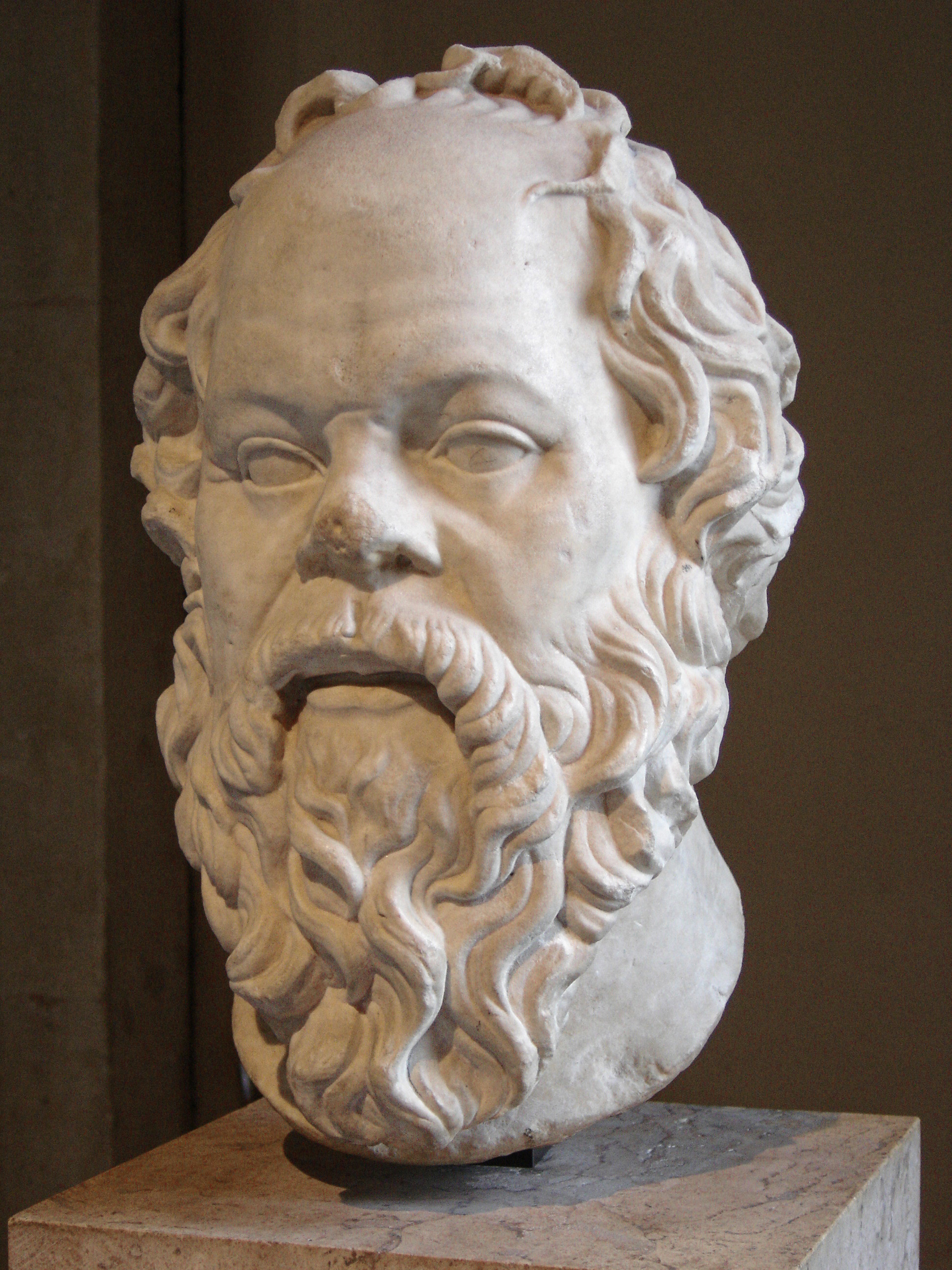
Image result for socrates
Socrates
Notably, this is a bit of wisdom which the Vikings have in common with Socrates and the Greek philosophical tradition. The aphorism "Know Yourself" (γνῶθι σεαυτόν) is said to have been etched over the doors of the temple of Apollo at Dephi—the structure which housed the Delphic Oracle. For Socrates the aphorism formed much of his motivation for engaging in philosophy and was also (if we are to believe The Apology) the clue to solving his ultimate riddle. The charge to seek out self-knowledge is a well established bit of wisdom. 

And yet, it often seems to be lacking in our online engagement. There seems to be no end to the stories and studies on the way in which social media in particular, but cyberspace generally, has been isolating us in to ever-more polarized echo chambers. Generally the danger these stories and studies are working to point out is that closing ourselves off from dissenting opinion and an attendant decreased capacity for empathy with those outside our echo chambers, and that is a legitimate and weighty concern. At the same time, though I think it is also critical to highlight the way in which existing in an echo-chamber robs us of opportunities for self-knowledge. My Dad regularly points out that "It takes a non-parochial fish to know that it is wet", in other words, it is often hardest to see the very thing we are most surrounded by. In fact, the greatest opportunities we have to discover our own condition is the experience of encountering other conditions. Those experiences are what give us the opportunity to contrast our own "normal" with someone else's "normal". The best chance that fish has of recognizing its own wetness is if it begins to encounter air bubbles.

So too, when we find ourselves spending our time online, immersed in mono-cultural echo chambers, it becomes incredibly difficult for us to recognize our thoughts and approaches as anything but "the way things are" and, since we tend to seek out the most comfortable possible environments, we are particularly unlikely to be confronted with our own faults and weaknesses. The phenomenon of socio-cultural isolation and grouping isn't just bad for society as a whole, it stunts our growth as individuals (think about how much easier it is to think of yourself as a "rugged individualist" when everyone you encounter has your back anyway).
A new environment can be...challenging

But what does all of this have to do with vulnerability as a virtue (and for those of you who aren't sold on the idea that vulnerability isn't a virtue at all, I have included Brene Brown's excellent TED talk on the subject below)? As I understand it, vulnerability is a hybrid virtue combining love and courage. Vulnerability means loving the other (or the self) enough to risk being hurt while courage is the capacity to do what needs to be done. In this case we are being called to be vulnerable with our own selves. This critical virtue means first seeking out enough of an experience of the world that we are able to recognize ourselves, not as default humans, but as particular and unique beings (be like the cow and don't stop eating before you are full) and we have to take a good long look at that self which our experience has illuminated and risk the pain of seeing our own failings. In his essay On Forgiveness, CS Lewis points out:
Real forgiveness means looking steadily at the sin, the sin that is left over without any excuse, after all allowances have been made, and seeing it in all its horror, dirt, meanness, and malice, and nevertheless being wholly reconciled to the man who has done it.
I would suggest that that forgiveness critical when "the man" is myself. And it is vulnerability which empowers that forgiveness.

Resources:

Image result for politecho
If you are looking for ways to break out of—or at least recognize—your echo chamber, I ran into this tool from PolitEcho the other day which analyzes your FB feed and lets you know more about your political bubble. You might find it useful.


Brene Brown's talk on Vulnerability, she has also written a number of books on the subject:


Saturday, March 4, 2017

A Time to Speak and a Time to Listen - The Wisdom of the Vikings Part 10

Don't be like this

Bad Manners

At a feast
the fool chatters
or he stares and stammers.
Just as soon as
his jug is full
ale unveils his mind.

Experience

He is truly wise
who's travelled far
and knows the ways of the world.
He who has travelled
can tell what spirit
governs the men he meets.


Note: This is part 10 in an ongoing series (the series starts HERE) bringing together the Hávamál (a collection of Norse wisdom poetry) and the still-evolving rules and mores of the Internet, particularly as they are developing in the realm of social media.

As we have worked our way through the Hávamál, it has become increasingly clear that the wisdom structure within it relies heavily on an Aristotelian style virtue ethic (click back to Part 9 for a good synopsis of virtue ethics). The aphorisms all apply but sometimes may seem to be contradictory due to the fact that the situations differ. In one context, the wise thing may well be to avoid confrontation, whereas in another situation it is all but necessary to engage as thoroughly as possible. The first situation calls for the virtue of discretion while the second requires boldness or courage. Critically though, any application of virtue ethics requires a controlling virtue of discernment, what Aristotle referred to as practical wisdom (phronêsis)

These two poems do a good job of establishing both the necessity and basic process for acquiring discernment. In the first, we get a picture of the person who lacks discernment—the fool. The character who, in medieval Iceland, distinguished himself by talking first and noticing later, or attempting to engage beyond his depth - talking and chattering just as soon as he relaxed into his drink, is just about as easy to spot online. This is the character who seems to have something to say before he even reads the comments thread, the individual who is sharing her "all important, epic takedown" which turns out to be a banal or fallacy-filled scree. One of the troubling things about the fool is that fools rarely recognize their own foolishness - they are proverbially "wise in their own eyes". Internet fools, like Viking fools, are recognized as such by others long before they see their own foolishness. 


Wisdom will be recognized —
it doesn't have to be asserted.
In these two poems, the Hávamál offers the, remarkably un-sexy, reliable cure to fool-dom—experience. The virtue of discernment—that power to recognize the quality of ones own thoughts, as well as others as well as when it is and is not appropriate to share those thoughts—cannot be bought for gold or silver. There is not quick and easy method for obtaining it (though if you can get a sip of the mead of the Gods that might not hurt). One has to experience the relevant world. The best advice at this point is to probably assume that "being new" = "being a fool", though that should be taken far more as a rule of thumb than as some sort of ontological proclamation. A second piece of advice (though it does not show up in these two poems) would be to be humble whenever possible. One clear difference between fools and the wise is that fools are far more likely to make sweeping declarations where the wise ask questions and hedge their statements (though this too can be taken too far but that is a question for another post). 

So take some time, read all the other comments before you post anything critical, and stick around to see how the conversation goes. Thank others for their input and the read some more.


Click HERE for Part 11

Tuesday, February 14, 2017

Joyful Dignity - The Wisdom of the Vikings Part 8

Responsibility

A King's son should be thoughtful
thorough and silent
brave in battle.
A man should be happy
and in good humor
to his dying day

This is part 8 in an ongoing series (the series starts HERE) bringing together the Hávamál (a collection of Norse wisdom poetry) and the still-evolving rules and mores of the Internet, particularly as they are developing in the realm of social media.

In any tense—let us say combative—situation, strong emotions can be galling. The classic iteration is the "sore loser" though many of us have been just as irritated by "sore winners" on occasion. In either case, outbursts which are generally contrary to the mood of the community or the environment are not well received. It is people who have enough control over their own displays of emotion who have the upper hand in a competitive, social environment.

Medieval Iceland they rejected kingship in general, though they had a clear memory of the institution, so I would suggest that the "King's son" in this poem is a placeholder for the same social archetype that it serves in our own democratic republican society - the natural, noble leader. So this advice should not be read as restricted to an irrelevant nobility, but as prescriptive advice for anyone who aspires to a leadership position in society. These are qualities—the virtues—one ought to cultivate in the pursuit of that goal. 

This is not going to go well
Within that context, this poem amounts to a recommendation of the virtue of temperance. We don't discuss this virtue much anymore (most people who have encountered the word at all are only familiar with the definition derived from the abolition of alcohol in the early 20th century United States) . In classical understanding, "temperance" amounted roughly to being in control of one's reactions. Emotionally this meant both not making impassioned decisions or proclamations without first considering the consequences and not being utterly devoid of emotion. Its opposites are both dramatic emotionalism on the one hand, and utter stoicism on the other. The temperate person has emotions but is not ruled by them. 

Viking leaders would then be expected to be restrained in the heat of combat (in contrast the berserker), but able to thoroughly engage in the joys of life. This person is not just relate-ably human, but a genuinely pleasant human to be around. 

Neither is this
It strikes me that there isn't really enough of this online, but the advice certainly rings true when we encounter someone who possesses this virtue. Intemperate folks of both varieties abound online. People who react emotionally and immediately, sharing poorly sourced, over-hyped "news stories" without doing their due diligence, and folks who freak out in the comments section and play right into the hands of trolls represent one form of intemperance (and probably the first type to spring to mind); but just as ineffective as social media leaders are contributors who are all bland facts, numbers, and analysis who seem blithely unaware of the humanity and real costs of the information they are trading in. Both of these types are failing to exhibit temperance. 

So what makes a good leader both in medieval Iceland and in contemporary online communities? People who have emotions, but are not slaves to them. We follow and admire the people who are able to project their humanity without losing control of it (or when they do lose control it is for reasons we can empathize with). It is that person in the forums who seems to really care about the issue and is also well informed. The person who posts about important issues and also shares photos of their dog. 

I have posted some examples below. Let me know what you think:

Hank Green of Vlogbrothers (and a whole lot of other stuff)


His brother John Green of Vlogbrothers (these guys are everywhere)

Click HERE for Part 9
Click to get the Hávamál on Amazon


Sunday, February 12, 2017

Dangerous Drink - Wisdom of the Vikings Part 7


Alertness

Better weight
than wisdom
a traveller cannot carry.
A clear head
is good company.
Drink is a dangerous friend.


Drinking

Ale
has too often
been praised by poets.
The longer you drink
the less sense
your mind makes of things.


This is part 7 in an ongoing series (the series starts HERE) bringing together the Hávamál (a collection of Norse wisdom poetry) and the still-evolving rules and mores of the Internet, particularly as they are developing in the realm of social media.


These two poems contain the abundantly clear (yet far to oft' ignored) advice that it is not wise to consume too much alcohol. It may well be worthwhile spending time reiterating this message (and I suspect that "don't drink and tweet" is necessary advice for many) but I want to focus instead on the principle which, I think, made this advice especially important for medieval Icelanders; advice which, I suspect, is nearly as important for those engaging in digital society. 

In the largely anarchic society of medieval Iceland hospitality and courtesy were incredibly important values. In any society where arguments can become feuds which can, in turn, become near civil wars, it is of the utmost importance not to get the ball rolling in the first place. If Sven insults Olaf, and Olaf feels the need to revenge himself on Sven such that he himself has to be put back in place by Sven and his friends, there is no easy way to stop the process once it has begun. So the easiest, and best, answer is to stop really vitriolic personal arguments before they begin.


But this dynamic is necessarily in tension with the need to establish a reputation as a good and powerful individual since being perceived to be dangerous is one of the most effective preventative actions an individual or small community can take to forestall unwanted conflict. The tension between the need to be courteous and the need to appear dangerous, leads to something of a tightrope walk wherein each word, objection, or boast has to be carefully calculated to elicit just the right response from one's company, particularly when that company is not part of your own close-knit community.

Alcohol, for all of its virtues, is not conducive to tightrope walking. I suspect that the deeper point being made in these passages is that drink is something best reserved for moments of celebration and among close friends, where it is safe to be unguarded. It would have been the height of foolishness (and too often was) for a Viking to let her guard down and start boasting and insulting around company which might take offense. 

Get the Havamal on Amazon
So, too, in the age of the internet and social media, we are well advised to remember that publicly made comments are, well, public. That unless we know that our thoughts are going to be restricted to the friends and companions who really love and understand us, we would do well not to let ourselves become "giddy" or "punch drunk" in our reactions and comments. Think to the many and increasing stories of people whose lives and livelihoods have been materially damaged as a result of their unguarded language or comments. In an environment where the crowd, rather than the state, exacts vengeance, it is important not to engage when something (drink for sure but also passion, excitement, anger etc...) might be clouding our judgement.


PART 8

Thursday, February 9, 2017

Wisdom and Reputation - Wisdom of the Vikings Part 6


Independence

It is fortunate 
to be favoured
with praise and popularity.
It is dire luck
to be dependent
on the feelings of a fellow-man.

Opinion of Others

He is fortunate
who is favoured
with respect and good reason.
Advice given
by others
is often ill counsel


This is part 6 in an ongoing series (the series starts HERE) bringing together the Hávamál (a collection of Norse wisdom poetry) and the still-evolving rules and mores of the Internet, particularly as they are developing in the realm of social media.

These two poems deal rather directly with the power and danger inherent in the good opinion of others. Despite the Viking reputation for toughness which we in the United States often associate with a sort of rugged individualism (and, to be fair, the Icelanders certainly had their share of individualism relative to the rest of the medieval west), Icelanders recognized—far better than many in the modern westthe vital importance of functional community. Indeed much of the Hávamál deals explicitly with how to retain functional community in a tense and violent situation. In this context, the good opinion of others—potential allies or enemies—is as much a resource as physical strength of skill. Humans are a social species after all.

So in these pieces we encounter both an acknowledgement that a good reputation is of significant value and the warning that those who become overly dependent on the opinion of others ultimately harm themselves. It is a blade which can turn on the hand that holds it. On the positive side, being the sort of person that others respect is pleasant and protective. Online, having a lot of "followers" or readers" is the basic form of capital. It may not be what you are there "for" but, for better or worse, it is the way internet culture tends to determine the value of a particular account (if not the value of the person who controls that account). Being a thought framer, someone whose ideas are valued by others is fundamental to this, and one classic indication that an online thought leader is going into decline is that they become derivative, merely echoing and amplifying the ideas and creativity of others.

Almost paradoxically though, one of the greatest dangers to someone with a good reputation is the temptation to rely on that reputation in their estimation of their own value. The moment a successful internet creator begins to ask "will my followers approve of this idea" is the moment that the quality of their ideas begins to decline. It was the independence and honesty of the thought product that drew your audience in the first place which means that the tighter you cling to the audience, the less they will respect you for it and the more your work will suffer. 


PART 7


Wednesday, December 28, 2011

Confession of a Luddite Sympathist

 
It seems to me that if you are going to tell the world that modern technology and specifically social media type technology makes you uneasy, and you are going to say it on your blog, then you had better frame the statement as a confession. So here it is:

I confess - technological development makes me uneasy and I have a constant sort of background nervousness about what social media is doing to our ability to relate to one another in healthy ways.

And now for disclaimers: I do not actually disapprove of technology, I try hard to stay on top of technological development and I think that it offers great opportunities for good. My confession is one of inclination not of decision so while there is a little worried knot in my stomach every time some new device of website catches on, I go ahead and try to learn the tech and see what can be made of it.

Technology is essentially power. In fact it is an expression of power which is almost unique to humans (I think I remember that there are certain monkeys which do stuff with sticks and I heard somewhere that sea otters will hold on to especially useful "shellfish cracking" rocks). It is the manifestation of the power of thought, imagination and innovation and as such it really sort of deserves to be celebrated - all things are indeed glorious for being themselves.

I believe C.S. Lewis J.R.R. Tolkien and G.K. Chesterton each pointed out that the desire to develop technology is a manifestation of the same desire which leads people to try magic (Lewis has some really great things to say about this in The Abolition of Man). The technologist and the alchemist are the right and left hands of the same impetus. In fact when you get right down to brass tacks definitions it becomes surprisingly difficult to differentiate between the two. The major difference is that technology has worked while magic hasn't.

The problem is that technology is power - and exponentially increasing power at that - in the hands of a species with questionable moral character. Power only increases an individual's ability to do what they want to do, to "enacting their will on the world" as the philosopher would say. It is a good thing for a good person to enact their will on the world, but conversely it is a bad thing for a bad person to enact their will. And technology itself does not discriminate between good and bad, it simply amplifies. Technology makes bad people more able to do worse things and good people more able to do good things.

I think that Facebook gives a useful example. Facebook (together with other social media) has enable people to organize and topple repressive regimes. I take this to be a good thing, although I have not always been pleased with the "new boss", but that is another post. At the same time, I believe that Facebook (again together with other social media) has enabled people to create illusory relationships which save them from the difficulty and ultimate satisfaction of forging real relationships. It allows for someone to become increasingly antisocial without feeling as many of the negative effects of actually being alone.

All of this is because technology essentially amoral. It is not immoral, for then it could not serve and especially not amplify the good that it is so often used for. Neither is it moral, for then it could not be used in the service of harming people as it has so often been. Technology is a catalyst, an amplifier, to stake out yet another "mushy middle" position, it is what you make of it.

But maybe things are not quite so simple as that. As Spiderman is wont to remind us, "With great power comes great responsibility". We need to ask ourselves whether we are able to handle that sort of responsibility. After all, there was a time when the worst mankind could do with its power was to kill itself off. This would have been a bad enough thing and we managed to be responsible enough not to do it. But now, with much greater power, we carry much greater responsibilities. We now have the power to reduce our entire planet to a glowing slag heap, ending nearly all life; and we are responsible for how that power is going to be used.

So the question "is technological development a good thing?" turns out to be the question "is it a good idea for beings like us to be more powerful?" and our answer will have to depend on whether or not we think that human beings ought to be trusted with this much power. And this is a hard question to answer because in reality we all clearly observe that humans, both collectively and individually, are both incredibly evil and shockingly good. We are beings of unimaginable glory and holiness who have become corrupted and evil. We are just about as paradoxical a set of beings as can be imagines, veritable gods who have become demons and still aspire to godhood what the Greek Orthodox call Theosis. We are the only species that could have produced bothe Mother Teresa and Hitler and that species tension is at work in each of us. Indeed, to go back to C.S. Lewis, one of those two must be our ultimate destiny:

"It is a serious thing to live in a society of possible gods and goddesses, to remember that the dullest and most uninteresting person you talk to may one day be a creature which, if you saw it now, you would be strongly tempted to worship, or else a horror and a corruption such as you now meet, if at all, only in a nightmare. All day long we are, in some degree, helping each other to one or other of these destinations." - The Weight of Glory

But then maybe a growth in human technological power is unavoidable, maybe whatever the answer to that question, we will still be faced with an inevitable increase in human power. So we might want to jump strait to another question: "how can we ensure that power is used responsibly? How can we keep from blowing up the world or turning the vast majority of the population into unthinking, consuming zombies?" After all, there are certainly people out there who project exponential and unavoidable technological growth over the next few years.

To my mind, the answer to these latter questions (I don't think that technological progress is something which can be effectively fought) is twofold: First we have to find a way to make people better - in spiritual terms we have to really focus on bringing the Kingdom of Heaven to Earth, we have to begin to really care about things like sanctification, maybe we need to go back and read James and Hebrews again. And secondly we need to never cease in doing good to the best of our own ability - and this must include the acquisition of the technological expertise which will enable us to become more effective peacemakers, more efficiently generous, more aware of the suffering that we are to be forever healing. After all, Spiderman works backwards as well: "With great responsibility comes the providence of great power" at least it must God was serious when He promised to provide everything necessary for the doing of His will.