Search This Blog

Showing posts with label Gay. Show all posts

Monday, March 6, 2023

Jesus Revolution is a Good Story that Needs an Honest Frame.

It has to be said that Lonnie Frisbee was a gay man who died of AIDS in 1993.  

Lonnie was also one of three major protagonists (together with Chuck Smith and Greg Laurie) in the recent religious/historical drama Jesus Revolution about the Southern California originis and beginning of the Jesus People movement. The movie faithfully and, sometimes humorously sometimes tenderly, portrays Lonnie as a the goofy, prophetic, hippie preacher who was instrumental in convincing Chuck Smith to give the hippies a chance at god and who moved his Calvary Chapel church into an era of love and inclusion that marked the beginning of the Southern California Jesus People movement. In the movie Lonnie is played compellingly by Jonathan Roumie who, based on the accounts I have read and footage I  have watched of Frisbee, ably captures his trippy-hippie demeanor and his intense passion for Jesus and for "his people". And in Jesus Revolution there is no mention of the fact that Lonnie Frisby was gay and died of AIDS, not even in the final summary of his life at the end of the film. They tell us he died in 93, they don't say how. That is why it has to be said that Lonnie Frisbee was a gay man who died of AIDS in 1993.

I wanted to foreground that fact because watching Jesus Revolution was, for me, an agony of conflicting emotions, informed by what I already knew about Lonnie Frisbee. Part of my own spiritual jouney includes seven or so formative years in the Vineyard movement and the story told in this movie and Lonnie's part in it were already very much on my radar. Because of my experience with the Vineyard I have been reading through the three part co-authored autobiography of Lonnie Frisbee and
appreciated the 2005 documentary on his life. I have also managed to get several conversations with people (all within the Vineyard movement) who knew Lonnie and, as a queer Christian it has been hard not to see Lonnie and his story as a bit of a portent for other LGBTQ+ christians vis-a-vis the Vineyard.*

Going into the movie I told my wife that I was intrigued to watch it particularly because so many of the people I know have been divided in their response to the film and that the division doesn't seem to fall along any predictable lines. Some progressive Christians like it, while others very much don't; some Vineyard people who were there either for the events of the film or for the Vineyard centered version a decade later involving many of the same people and ground liked it while others didn't. I wanted to understand why. 

It makes sense to me now. At its heart the surface message of the film is that Jesus is for everyone, that trying to gatekeep access to Church and to the Holy Spirit is wrong, that the Holy Spirit moves in ways we wouldn't predict among people we wouldn't predict and that loving and including the socially marginalized and alienated is central to the call of the church. While there might be a few theological quibbles (the salvation narrative in the movie is rather notably individualistic but that is accurate to the theology of Calvary Chapel) by and large that message is absolutely one that progressive and affirming Christians can get behind. At one dramatic moment about halfway through they include a powerful (if slightly on-the-nose) scene in which two out of three of Chuck Smith's stodgy "square" original attenders march out of the church in protest after Smith (magnificently played phenomenally by Kelsey Grammer) overcomes some of his own prejudices as declares that the doors to Calvary Chapel are open to any who want to enter and to all who want to leave. The third attender stands up as if to leave and then re-seats himself among the hippies. I started to weep. 

But I wept at that scene for two reasons. All throught the scene, the camera keeps panning over to Lonnie, smiling at Chuck, affirming and blessing his decision. For those of you have have also been watching The Chosen it is worth noting here that Jonathan Roumie is the same actor who plays Jesus in that series and I found it almost impossible in that scene not to see Frisbee through the sort of double vision linked both to the character's role in the movie and the actor's portrayal of Jesus in a separate series. The scene feels like Jesus is blessing Chuck Smith and welcoming him deeper into God's beutiful kin-dom as Chuck chooses inclusion over comfort and "clean carpets". Under any circumstances that scene would have moved me. But it was deeper than that.

In storytelling we often encounter the mechanic of a frame narrative in which the central story is presented as a story within a larger story (the frame). In The Lord of the Rings, Tolkien presents himself not as the author (though of course he is) but as the translator and compiler of The Red Book of Westmarch and other fictional material. In The Canterbury Tales the stories are are presented as travelling tales told by a diverse party who are all on pilgrimage together. You get the picture. In Jesus Revolution the strory-wthin-the-story is all about people coming together to find that God is Love and that the mission of the Church necessarily involves the inclusion of the marginalized, outcast, and alienated. But the frame of the story is heartbreaking. 

Chuck Smith, and John Wimber after him, both used Lonnie as a powerful vessel of the Holy Spirit (Lonnie was, for the record, a really strange man with some bad tendencies who rubbed some good people the wrong way—he wasn't an angel) and who both then effectively wrote him out of the history of the movements they used him to start once they had rejected him. In Chuck Smith's case my understanding is that he rejected Lonnie based on some personality conflicts (which are showcased in the film) and some theological differences which the film barely nods to. John Wimber rejected and erased Lonnie Frisbee from vineyard history for being gay and for all that came with being an honest but closeted Christian gay man in the early to mid 80s. When Chuck Smith gave a eulogy at Lonnie's funeral, the most he could manage was that Lonnie had been "like Sampson", full of potential, too much of which was squandered. 

The frame around the beautiful story the film tells is a different story. That frame is a story of rejection; a story of limited inclusion sold as full inclusion; a story of spiritual abuse, of hiding who you are. The story-within-the-story of Jesus Revolution is one that is all to familiar to queer Christians. Far too often we have been invited in with gospels of inclusion, radical love, deep community, and full belonging only to find that, when we inevitably failed to be "cured" of the holy queerness that was never a sin to begin with, that love, inclusion, welcome, and acceptance are inevitably revoked. Jesus Revolution is the story of boomer hippie Christians finding God's radical love and acceptance framed within an ultimate rejection of queer Christians. For Gen Xers and Millennials, that story played out during the emergent, welcoming, and missional church movements of the early-mid 2000s. The Vineyard Movement in the US didn't officially restrict the full participation of gay, lesbian, and bisexual Christians until 2014** though they had been running/sponsoring "soft" conversion therapy programs for a long while before that. The pain of rejection by those who claim to follow the God who loves and accepts queer people, who affirms us as we are, is very deep and very real. And so is the history of erasing that.

In some ways then, Jesus Revolution, when taken together with its frame, tells a deeply true and honest story. It is the story of a church who has used queer Christians so long as our queerness remained invisible, has damaged us in the process, and has ultimately worked to wall us off from any work of inclusion the Holy Spirit may perform among them—even works that the Spirit uses us to initiate. The true and honest story of how the church also shamefully tries to erase us and to hide the evidence both of its dependence on us (who sings Vicky Beeching songs anymore?) and of its rejection. Our cries outside of the church doors give lie to their acceptance of the Gospel of peace; when Chuck Smith invited the hippies in, he also shut a part of Lonnie out. 

Before I went to the movie, knowing what it was about, a friend of mine asked on social media, what the story meant to different people. I said that to me, the story of Lonnie Frisbee represents a heartbreaking lost opportunity. I invited those in that conversation to imagine how things today might have been different if Chuck Smith or John Wimber had stopped to wonder what it could mean that the Holy Spirit chose to work so powerfully though a gay man while he was in a relationship with another man. To wonder why the Holy Spirit who had miraculously healed people through Lonnie and delivered them from addictions and oppression, never "healed" Lonnie of his homosexuality and had realized that God does not fix what was never broken. I asked them to think about a world where Lonnie's death of AIDS drove the Vineyard to sponsor a chaper of ACT UP in every Vineyard Church. To me this is a heartbreaking story of a lost opportunity and what might have been.

Ultimately Jesus Revolution without its historical frame is a mostly beautiful and compelling picture of what the Church is called to be; with it's frame it is a deeply troubling picture of what the church actually is: messy, harmful, healing, broken, and growing whole. I am encouraged by what is there and I hope in Christ that the Spirit will make up in Her power what the Church has not yet learned to do.

Footnotes

*For a fuller account of Lonnie's story I really recommend Matt Nightingale's piece HERE 

** In its Position Paper 7: Pastoring LGBT Persons Vineyard USA prohibits the ordination of anyone in a same-sex marriage and forbids pastors from performing same-sex marriages in their capacity as Vineyard pastors. In keeping with the theme of this review, VUSA has elected to remove Position Paper 7 from its website but has not recinded it.

Monday, October 31, 2016

Homosexuality in the Old Testament: My Defense of LGB Relationships Part 3

Note this is Part 3 in a series which begins HERE

For my series in defense of the identities of transgender folk click HERE
My post in defense of Intersex persons is HERE


I think most evangelical Christians, regardless of their personal beliefs regarding LGB folk, see the Old Testament as something of a slam dunk for the more traditional position (1). The Sodom story and the term sodomite which we get from it, loom large in our minds. Leviticus 18:19-23  is as least as clear as Romans 1 in its prohibition of men having sex with men, and Leviticus 20:13 requires the death penalty for men who “lie with a man as one lies with a woman”, though for some reason, we don’t pay much attention to the horrific account of the Levite’s concubine in Judges 19.
 
And as with Romans 1 in the last post, I think that it is problematic to claim that any of these passages, much less all of them when taken together, are referring to any and all instances of gay sex. In the case of the Leviticus passages (which like the Romans 1 passage is descriptive), we need to ask, what is being talked about when the act is described. In the cases of Sodom and the Levite’s concubine, the question becomes “what, precisely, is the passage condemning?”
 
I should note at this point that in order to keep the length of this post under control, I will be addressing Genesis and the creation narrative in my next post when I take a look at natural law theory and the oblique references.
 
Let me begin with the Sodom story. There is a tradition that the “sin of Sodom”, which apparently grieved God so much that He destroyed the city with fire from heaven, was the practice of gay sex, and this has been used as evidence that God really doesn’t like it when people have gay sex. But there are some serious problems with this position. First is that Ezekiel 16:44-52 identified the sin of Sodom as arrogance, greed, and extreme inhospitality. We don’t actually get a reference to homosexuality in Ezekiel’s account of Sodom and while the passage is full of generally sexual imagery, it is actually fairly difficult to construct any of it as homosexual.
 
Furthermore, the men of Sodom’s desire to rape foreigners does fit with the concept of extreme inhospitality which Ezekiel calls out (and which Jesus seems to be referring to in Matthew 10:15). Attempts to focus on the homosexual aspect of Sodom’s sin (that it was men (2) that they wanted to rape) are particularly problematic in that they minimize the horror of sexual violence and tend to gloss over Lot’s incredibly upsetting solution to the problem - offering his daughters in place of the angels (3). I am not going to argue (particularly in light of Jude 1:7 (4) ) that sexual sin had nothing to do with the sin of Sodom, however I see no reason to conclude that the sin in question was gay sex when it is clear that an overwhelming rape culture was so pervasive in the city. If God condemned the city for cultivating a culture of raping foreigners, it seems far more likely that He was condemning the rape than the homosexuality.
 
The story of the Levite’s concubine in Judges can be subject to the same analysis (5).
 
Which leaves us with Leviticus. And again I want to begin by looking at the cultural context for discussions of homosexuality, this time in the ancient near-east. In other words, what would have been in the minds of the original author and readership of Leviticus concerning “men who lie with men as one lies with a woman?”
 
As with the Hellenistic culture of Romans 1, whatever was being described, it seems fairly safe to say that monogamous, covenant relationships would not have been within their overall concept of the practice. Certainly there is less information available about the practice of gay sex in ancient Mesopotamia and the near east than there is for classical Greece and Rome. However, so far as I have been able to discover, the predominant cultural expressions of gay sex involved temple and cult prostitution, auto-emasculation, and ritual domination. And so once more, what are currently translated as straightforward descriptive denunciations of gay sex turn out to have involved connotations of idolatry and abuse.
 
With this observation, certain things begin to stand out in careful exegesis of the passages: Notably, the Leviticus passages both restrict themselves to proscriptions of male-male sex. This is striking (even in a fairly andro-centric context) because in the Leviticus 18 account, the next prohibition (bestiality) does include prohibitions for both men and women while the surrounding sexual prohibitions (being heterosexual in nature) also include women (6). I would suggest that if Leviticus is condemning this sex merely because it is homosexual then it ought to be followed by a parallel proscription of lesbian sex. If, on the other hand, “lying with a man as one lies with a woman” is being forbidden because it is bound up in cult prostitution and idolatry, there would be no reason to include a parallel condemnation of lesbian sex which (so far as we know) was not an integral part of any contemporary cult practice. In short, the absence of lesbian sex in Leviticus 18 only makes sense if the prohibition is of cult prostitution and not of homosexual sex per se.
 
Ultimately, the contemporary, dominant, expressions of gay sex were bound up in practices (temple prostitution, idol worship, auto-emasculation, ritual domination-rape) which nearly all Christians today can agree are incredibly sinful and/or damaging. I believe that it was these “practices of the nations” which God was warning people away from, not the monogamous, covenant relationships LGB Christians are asking the Church to recognize today. And this is the model for homosexuality which seems to have existed in the Hebrew worldview which, together with the contemporary hellenistic/Roman model would have been what Paul had in mind when he wrote the letter to the Romans (7).
 
In Summary:

Although both the Old Testament and the New Testament have only negative things to say about gay sex when they discuss it, the gay sex being discussed is always entwined with uncontroversially negative and damaging practices (rape, cult prostitution, pederasty, and auto-emasculation). The Bible would be (and in many places is) just as condemning of heterosexual sex when it is practiced in equivalent ways. It is therefore not warranted to conclude that God condemns gay sex when it is practiced in the monogamous, covenant context of marriage. At least not on the basis of careful exegesis of the “direct references” in Scripture. In the next post I hope to address Genesis, natural law, and porneia … oh my!

PART 4: The Indirect Texts HERE

Footnotes:
(1) The most common response I have seen from the LGB affirming crew is to point out that very few Christians take the OT law as particularly binding or are able to enunciate a hermeneutic which justifies a selective application of Leviticus. This is probably true but it doesn’t actually prove the case one way or the other.
(2) Male angels? This brings up some interesting questions pertaining to the gendered-ness of spiritual beings, for more on that, check out my series on a Christian Defense of the Identities of Transgender Persons.
(3) The generally acknowledged "magisterial" work on the subject of sexuality in the Old Testament is Flame of Yahweh by Richard M. Davidson. I am not a fan, and Davidson particularly loses me on this point where he argues that the men of Sodom were not in fact attempting to rape but only to have consensual sex with the angels and defends his position by pointing out that Lot offers his daughters to the crowd in lieu of the angels. Davidson seems to believe that if a father offers his daughters to an angry crowd in order to satisfy their sexual demands, the crowd’s subsequent treatment of those women would not qualify as rape.
(4) It is worth pointing out the the ESV’s translation of “sarkos heteras” as “unnatural desire” constitutes some unwarranted commentary-in-translation, and that the more literal “other flesh” would have been a better fit as it would have reflected the Matthew and Ezekiel interpretations by allowing for the concept of extreme (sexual) inhospitality to foreigners.
(5) Although at least in this one Davidson is willing to admit that there was rape going on - despite the fact that it uses the same words as the Sodom account.
(6) This is also true of the Leviticus 20 passage, though the order is different.
(7) I should probably mention here that Philo of Alexandria (a Jewish Theologian/Philosopher contemporary of Paul) universally associates gay sex with paganism, cult prostitution, extreme hedonism, auto-emasculation, and/or paederasty. He also sees it as “contrary to nature” because it is non-procreative, which I will discuss at length in the next post.

Romans 1: My Christian Defense of LGB Relationships Part 2

Note that this is Part 2 in a series which begins HERE

For my series in defense of the identities of transgender folk click HERE

My post in defense of Intersex persons is HERE

Of all the biblical passages cited as proscriptions of gay sex, Romans 1 is probably the favorite and I think understandably so. As I have already mentioned, there are legitimate scholarly debates over the translation of the only other direct mentions of homosexuality in the NT but Romans 1:26-27 seems far less ambiguous since, rather than using a particular term, it describes what it is condemning. Certainly in my own development on this topic, there was a time where everything seemed to hang on Romans 1.

So let me dive in. First, I think the basic assertion I just made is actually fairly problematic. It might be convenient if a basic description of an act could be taken to represent all possible variations of that act but that just isn’t how language and communication work. I think it is fairly certain that Paul is describing gay sex in Romans 1:26-27, but I do not think it is at all obvious that the Romans 1 description should be taken as representing all possible instances of gay sex. What needs to be asked is: “What was Paul talking about when he describes gay sex in Romans 1?” And in order to answer that question we will have to look into connotations of gay sex in the 1st century Hebrew and Roman worlds.

Let me be clear, I am claiming that while Paul may have been aware of something roughly analogous to our contemporary understanding of homosexuality, (though even the classical Greek approach doesn’t map perfectly on to our current model)  it is an extreme stretch to claim that our contemporary understanding is what he would have been talking about in Romans 1. If that seems far fetched, let me illustrate with an example of how we use language:
If I were to say that I support the right of parents to have their child circumcised it would seem to be a fairly straightforward statement, and for most practical purposes it is. However, it is possible that some future scholar, studying my life and writings, could legitimately demonstrate that I am aware of the practice of female circumcision and thereby argue that I support the right of parents to have their daughter circumcised. The thing is, our future scholar would be dead wrong. I am entirely opposed to female circumcision. And yet the original statement “I support the right of parents to have their child circumcised” is still a true statement because in our cultural context, female circumcision is not a live option. Female circumcision (excision) is a thing I am aware of and is legitimately within the lexical domain of “circumcision” but it is not what I am talking about when I talk about circumcision in my American context (1).
Thus to assume that Paul’s description in Romans 1 automatically includes what we might refer to as a monogamous, covenant, gay marriage commits the same linguistic fallacy involved in assuming that I support excision. In order to determine what Paul was talking about, we have to look at the dominant cultural connotations of gay sex.
 
Contemporary scholarship suggests that there were three cultural understandings of gay sex which would have been available to Paul: The Hebrew, the classical Greek, and the Roman. Of these, I would argue that the Greek, while more nuanced and philosophical than the other two, is essentially irrelevant to Paul who was writing as a Jew to a mixed Jewish/Roman audience in a Latin context (2). A great deal of ink has been spilled speculating as to whether or not Paul would have been aware of the Greek theories on the subject but at the end of the day, even if he was, his knowledge does not warrant the claim that he was talking about them when he talked about gay sex in Romans 1.
 
So then what would Paul have been talking about? While scholars can get into all sorts of debate over exceptional, potentially loving, non-abusive instances of gay sex in the 1st century Roman world, they pretty much agree that the overwhelming majority fall under the categories of slave rape, pederastic dominance and abuse, temple prostitution, and adultery. As far as the Roman cultural connotations for gay sex are concerned it is safe to say that monogamous, covenant relationships were not what Romans meant when they talked about homosexuality, they were not a live option in that context (3).
  
But Paul was educated in a Hellenized Jewish context as was a portion of his audience in Romans so that context is relevant as well. I will get more into this in the next post but for now I will maintain that the dominant Hebrew cultural connotation for gay sex included temple prostitution, gentile licentiousness, and adultery, and seems to have mistakenly seen them as inseparable from any form of gay sex. As with the Romans, I maintain that monogamous, covenant relationships simply were not what 1st century Hebrews were talking about when they discussed homosexuality.
 
Furthermore, the immediate context of Roman 1 supports the claim that monogamous, covenant relationships are outside the scope of Paul’s discussion. Verses 26-27 are given as a social implication for refusing to worship God and are followed (4) by a list of other practices which arise as a result of that refusal. The full list is uniformly ugly, other-damaging and blasphemous. The dominant Roman (and Hebrew) expressions of gay sex fit well on the list, but monogamous, covenant, same-sex relationships do not. To claim that 26-27 must include all instances of gay sex one would have to claim that verse 30 must include all instances of a child disobeying their parent. But we recognize that Paul is not condemning the refusal of Christian converts to obey a parent’s order to participate in idolatry or another religion. We see that as a fairly obvious exception, one might even say “when the fruit of disobedience draws someone closer to God, we may safely conclude that we are dealing with a form of disobedience Paul was not talking about in Romans 1:30”. That same statement can be made in reference to Romans 1:26-27: “when the fruit of gay sex draws someone closer to God, we may safely conclude that we are dealing with a form of gay sex Paul was not talking about in Romans 1:30”

In summary:


  1. The cultural associations that Paul’s audience would have had with gay sex would not have included monogamous, covenant relationships. Therefore Paul should not be assumed to be talking about monogamous, covenant relationships.
  2. Exegetically there is space in Romans 1 to claim that Paul was not referring to every possible instance of an activity in his list of consequences for rejecting God. Therefore it is exegetically reasonable to claim that Paul’s description of gay sex does not necessarily include every possible instance of gay sex.

Click HERE For Part 3 in this Series: The Old Testament

Footnotes:

(1) This analogy still holds if I substitute the term “circumcision” with the phrase “surgical removal of genital tissue” so the fact that Romans 1 is descriptive does not substantively change the argument here.
(2) At a time when classical Greek thinking was 300-500 years old and about as relevant to the common person as enlightenment thinking is to my high school students: formative but not conscious and certainly not something they will cite in day to day life.
(3) Sarah Ruden and Louis Crompton are particularly useful sources here, though it is well documented elsewhere.
(4) Romans 1:28-32

Thursday, June 4, 2015

Tim Keller's Anachronism - My review of his review

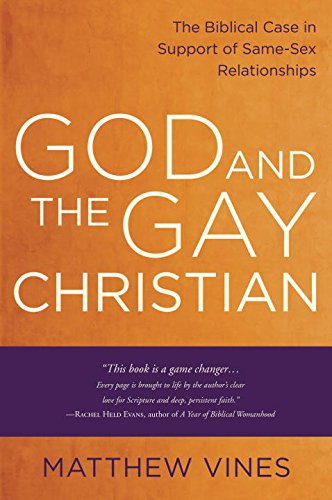
So Tim Keller recently released a sort of combined review entitled The Bible and same sex relationships: A review article about Matthew Vines’ God and the Gay Christian  and Ken Wilson’s A Letter to My Congregation in which he dismisses their overall arguments. I am not especially well acquainted with Keller’s Redeemer Presbyterian Church or his books but I know and love quite a few people who respect him deeply and up till now I have been generally impressed with the quotes and blurbs I have seen attributed to him. I have also seen his teachings generally have a good impact on people’s lives and I don’t think that my disagreement with him on this subject ought to undermine what are (so far as I can tell) the very real good he has brought to the world.


Additionally, while I do not agree with his conclusions, and have some very real concerns about the way he handled Vines and Wilson, I understand Dr. Keller has a strong record of genuinely trying to love LGBT persons. I like that he opens his review with a nod to Wesley Hill who represents, together with several other awesome people, by far the kindest face of non-affirming American Christianity that I am aware of.

However, once he got down into the body of his review, I found Dr. Keller’s reactions fairly deeply problematic. Let me respond to the first three sections now, in order to keep the length of this post manageable, and then offer some closing thoughts:


  • Knowing People Personally.

Keller’s response here is that If Vine’s and Wilson changed their views on the biblical legitimacy of gay sex after getting to know gay Christians, then they probably did have non-biblical positions to begin with because knowing wise gay Christians is not (in Keller’s estimation) a challenge to a conviction that “the bible never forbids homosexuality1”.

The intellectual point represented here is, I think, accurate: There are people who know gay Christians and respectfully disagree with those of them who believe that God does bless gay sex in certain circumstances. However, this is actually very difficult to analyze since Keller fails to provide his own account of a non-affirming theology which is not challenged by the existence of Godly, wise, gay Christians.


  • Consulting Historical Scholarship

In this section Keller suggests that Vines and Wilson have failed to account for contemporary research into the cultural/historical context for gay sex in the 1st Century. He references a few historians and scholars in support of his contention that Vines and Wilson have done bad historical scholarship and then launches into an analysis of the Aristophanes account in Plato’s Symposium as evidence against their claims.

This is probably the section I found the most problematic. The fact of the matter is that Keller is committing the same error he is accusing Vines and Wilson of. In fact, contemporary scholarship is fairly thoroughly divided on the specific question Keller is addressing here (what actually would have been in the minds of 1st century people when they discussed gay sex - pederasty, slave rape, auto castration, and temple prostitution or committed, monogamous relationships). Keller cites the scholars who agree with him and makes an undefended, and frankly unwarranted, claim that they are the “best” scholars on the subject.

Keller’s treatment of the Aristophanes account in Plato’s Symposium is particularly unfortunate as it is first anachronistic (it was written more the 300 years before Paul was born and is at best representative of Greek and not necessarily Roman culture) and also deeply problematic as a source even for Greek culture in the 4th century BCE. Aristophanes famously despised Socrates (Plato’s hero in the Symposium  and in life) and the feeling seems to have been mutual. Since the Symposium was written by Plato, any theories put in the mouth of Aristophanes can, at best, be read as ridiculous to Plato’s audience. So while Aristophanes does present a theory that some people are naturally attracted to their own sex, the best historical analysis of that passage would be that contemporary Greeks didn’t take that idea seriously.

The best part of this section is where Keller suggests that the reader “familiarize themselves with this research”. I recommend the same. But in addition to Loader and Brooten (who are fine scholars) I also recommend Cantarella, Crompton, Cameron, Halperin, Coontz, and Hersch. I would recommend starting with Luis Crompton’s Homosexuality and Civilization. 2


  • Re-categorizing same sex relations

This may be Keller’s weakest section. He spend a great many words trying to counter Vines’ claim, that the church’s view on homosexuality is analogous to its history with slavery and segregation - that the church discovered it had been misinterpreting the bible with respect to slavery and segregation and that it is therefore possible that the church has misinterpreted the bible with respect to homosexuality.  Keller argues that while the church never monolithically supported slavery, it has (until recently) monolithically opposed homosexuality. His response to Wilson’s claim, that the church’s reaction to homosexuality is analogous to its reaction to divorce, is a repeated claim that the church has monolithically opposed homosexuality.

The major problem here is the Keller seems to have forgotten about Church history between Jesus’ birth and the enlightenment. He fails to mention that the Church was effectively monolithic in its support for slavery and condemnation of divorce up till the enlightenment. For Keller’s argument to work here one would have to believe that the enlightenment (rather than Pentecost) marks the “true” beginning of the church.

Furthermore, the claim that the church has monolithically opposed homosexuality is anachronistic since our very concept of homosexuality only dates back to the middle of the 19th century. Prior to that homosexual wasn’t a category the church had, either to oppose or to accept. Certainly the vast majority of the church has historically opposed gay sex where they ran into it, but to equate what they were opposing (largely gay sex outside the context of committed monogamy unless John Boswell is to be believed, and Keller doesn’t) with contemporary gay sex in the context of same-sex marriages is, again, frightfully anachronistic.


Closing Thoughts:

One final thing which particularly troubles me about this review is that Keller only barely engages with Wilson’s actual point in A Letter to My Congregation. ALtMC is built around an analysis of Romans 14 and argues that gay sex in the context of a same-sex marriage falls under the category of “disputable matters” and that as such, it should not be used as a litmus test or barrier to full participation in the church. It seems to me that any review worth its salt ought to at least engage the primary argument of its subject matter.

ENDNOTES:
1. Throughout the piece, Keller conflates homosexuality - “being attracted to a person of the same sex” with gay sex - “gay sex”. In this section I suspect he means “gay sex”.

2.For a more thorough reaction to the type of argument Keller is making in this section check out Jim Brownson’s response to Gagnon.

Thursday, April 2, 2015

Meanwhile in Another Part of the Web

lgeraty
This is Luke,
with glasses
disqus_WcHryCMG23
This is me

In case any of you have been wondering about my take on the first three letters of the LGBT acronym, I have been discussing that in a conversation with Luke Geraty (a far more orthodox member of the Vineyard - our shared Christian tradition) over at his site Think Theology. We are currently at the halfway point in our six post series A Conversation on Homosexuality & the Church, so it seems like a good time to point it out. The three posts are:


Framing the Conversation

Arsenekoitai and Malakoi

Romans One

We are always thrilled when more people enter the discussion so please don't hesitate to comment on any of the posts or if you prefer a slightly smaller audience, leave a comment here.