Search This Blog

Showing posts with label Peter Kreeft. Show all posts

Wednesday, July 19, 2017

5 Good Books Which Will Challenge Your Conservative Evangelicalism

In reading Chesterton, as in reading MacDonald, I did not know what I was letting myself in for. A young man who wishes to remain a sound Atheist cannot be too careful of his reading. There are traps everywhere—"Bibles laid open, millions of surprises," as Herbert says, "fine nets and stratagems." God is, if I may say it, very unscrupulous.
- C.S. Lewis, Surprised by Joy
Writing as someone who has traversed the bridge from Solidly Evangelical to, well, not (I identify as a Charismatic Anabaptist) I thought it might be fun annotating a list of books which, once read, are likely to ease a person's transition out of Evangelicalism (of the American and White variety) and into some other form of Christianity. As such, this isn't a list of books by the "New Atheists" but a list of books by authors who operate in and around the edges of Conservative American Evangelicalism and who are all dedicated Christians.

Of course there are millions of Evangelicals (and I am using the term to designate those culturally conservative Christians in America who self-identify as Evangelical and have, in recent history been associated with right-wing politics) who who have read and appreciated these books, they don't have any mysterious power to rip the evangelicalism out of someone. What they do, and do well, is fuzz the (mostly cultural) boundaries which have been set up around American white Evangelicalism. Not challenging any of the basic tenets of the faith (the authors are all robustly Nicene or, as Lewis would have said, "Mere" Christians) allowing alert and critical readers the realization that God is, indeed, moving powerfully out there

The Great Divorce by C.S. Lewis

'Ye can know nothing of the end of all things, or nothing expressible in those terms. It may be, as the Lord said to the Lady Julian, that all will be well, and all will be well, and all manner of things will be well. But it's ill talking of such questions.'
'Because they are too terrible, Sir?'
'No. Because all answers deceive. If ye put the question from within Time and are asking about possibilities, the answer is certain. The choice of ways is before you. Neither is closed. Any man may choose eternal death. Those who choose it will have it. But if ye are trying to leap on into eternity, if ye are trying to see the final state of all things as it will be (for so ye must speak) when there are no more possibilities left but only the Real, then ye ask what cannot be answered to moral ears. Time is the very lens through which ye see—small and clear, as men see through the wrong end of a telescope—something that would otherwise be too big for ye to see at all. That thing is Freedom: the gift whereby ye most resemble your Maker and are yourselves parts of eternal reality. 

Nobody ever really warned me about C.S. Lewis back when I was an Evangelical. In fact, throughout my childhood and through college he remained something of a hero among Evangelicals of my stripe. Mere Christianity (having been instrumental in the conversion of so many Baby Boomers) was, and still is, revered as am Evangelical classic.

I, like many others, first encountered Lewis through The Chronicles of Narnia and later his Space Trilogy and The Screwtape Letters. I started to read his apologetic and theological works in college and moved on to his Literary theory while working on my masters. I remain an enormous fan. There are, to my mind, few authors of the 20th century who possess the lucidity of thought, keenness of intellect, and sheer creativity that Lewis demonstrates in so many of his works—academic or fictional.

Of course Lewis himself was an Anglican, not an Evangelical and his writing doesn't back down from that, so it shouldn't be surprising that reading and agreeing with Lewis will have the tendency of moving someone's "center" away from Evangelicalism and towards something more like "mere" Christianity. All the same, I don't know that there are any of his works which will prove more challenging to the Evangelicalism of a person, than The Great Divorce. The book is a fictional supposal in which Lewis goes on a bus ride to the outskirts of heaven where he encounters a series of individuals being given the opportunity to stay and flourish. The book is a masterwork of theological psychology as Lewis uses it to examine our reasons for resisting a Very Good God, the reasons a person might choose their own misery over infinite joy. Critical to our purposes here however, the conversations the fictional Lewis has with his "Master" George MacDonald, will do much to gently yet firmly undermine a good Evangelical's confidence in doctrines like eternal damnation. It isn't perfect (it contains a little too much of neo-Platonism to my mind) but it is both good and powerful.


The Sin of Certainty by Pete Enns

Correct thinking provides a sense of certainty. Without it, we fear that faith is on life support at best, dead and buried at worst. And who wants a dead or dying faith? So this fear of losing a handle on certainty leads to a preoccupation with correct thinking, making sure familiar beliefs are defended and supported at all costs. How strongly do we hold on to the old ways of thinking? Just recall those history courses where we read about Christians killing other Christians over all sorts of disagreements about doctrines few can even articulate today. Or perhaps just think of a skirmish you’ve had at church over a sermon, Sunday-school lesson, or which candidate to vote into public office. Preoccupation with correct thinking. That’s the deeper problem. It reduces the life of faith to sentry duty, a 24/7 task of pacing the ramparts and scanning the horizon to fend off incorrect thinking, in ourselves and others, too engrossed to come inside the halls and enjoy the banquet. 
This book is specifically targeted at one of the great fetishes of Evangelicalism: The conviction that certainty = faith and that the basic duty of  a good Christian is to police a particular set of propositions. I think the first attack God mounted on this stronghold in my life was through the Catholic Philosopher Peter Kreeft who once remarked on how bizarre (and un-biblical) it was to think that one had to pass a theology exam in order to get into heaven. Enns writes in a conversational, confessional style and his own commitment to God and his love of the Bible come through clearly. This book makes the list specifically because it is not the sort of book that an Evangelical who reads it will be able to dismiss as having been written by someone without a deep trust in God. Enns' life and reasoning work together to force the reader to take him seriously. Then, once he is taken seriously, the arguments cut winsomely and incisively right at the heart of the "salvation by correct-thoughts-alone" heresy.


The Myth of a Christian Nation by Greg Boyd

Consider these questions: Did Jesus ever suggest by word or example that we should aspire to acquire, let alone take over, the power of Caesar? Did Jesus spend any time and energy trying to improve, let alone dominate, the reigning government of his day? Did he ever work to pass laws against the sinners he hung out with and ministered to? Did he worry at all about ensuring that his rights and the religious rights of his followers were protected? Does any author in the New Testament remotely hint that engaging in this sort of activity has anything to do with the kingdom of God? The answer to all these questions is, of course, no.
What Lewis does to the Evangelical doctrine of hell, and Enns does to the salvation-by-correct-thoughts-alone doctrine, Boyd does to the civil religion endemic to so much of white Evangelicalism in America today. Like the previous two authors, Boyd is a committed Christian (and a Charismatic to boot). He takes the Bible seriously and Jesus even more so, he is committed to spreading the Gospel, and speaks, fluently, the language of Evangelicalism—he has even written a book of personal apologetics: Letters From a Skeptic: A Son Wrestles with his Father's Questions about Christianity.

Meanwhile, this book is an axe at the root of the tree of civil religion. In it, Boys works with both narrative and lucid argument to demonstrate that the Kingdom of God, as Jesus and Paul taught about it throughout the New Testament, is utterly different from governments as we understand them. He cuts right thought the false equation of "Good Christianity" with "Patriotism", carefully distinguishing this world's power over approach from Jesus' power under. 


The Civil War as Theological Crisis by Mark Noll

The Book that made the nation was destroying the nation; the nation that had taken to the Book was rescued not by the Book but by the force of arms.
It is worth stating up front that Noll is an Evangelical Christian with all of the Evangelical bona fides—a Wheaton College graduate, and later professor who has taught at Notre Dame and is currently at Regent—because this book will feel far more challenging to many Evangelicals than several of the previous ones. It doesn't so much challenge a particular belief of pillar of Evangelicalism as it does shake a basic conceit. When I was an Evangelical I held on hard to the belief that people who worked hard to interpret the Bible, so long a they worked at it in good faith, would arrive at the same, correct, conclusion. This book holds an almost painfully revealing mirror up to that conceit by examining the theological crisis among Evangelicals who lived up to and during the American civil war (yes there is some important historical difference between them and the Evangelicals of today). Noll's history is alarmingly reminiscent of the sorts of theological arguments Evangelicals are having today and most troublingly (to the Evangelical mind) it was the thinkers and pastors who were arguing for slavery—either as a necessary evil or as an outright good—who most clearly map onto the Evangelicals of today. They were the one's arguing for the "plain meaning of Scripture" they were the ones who accused their theological opponents of obfuscation-through-nuance. The Evangelical who reads this book will begin to find herself more and more nonplussed and eventually disturbed by the sort of arguments she sees her Evangelical compatriots making when they argue about the "hot button issues" facing the church today.


Sex Difference in Christian Theology by Megan DeFranza
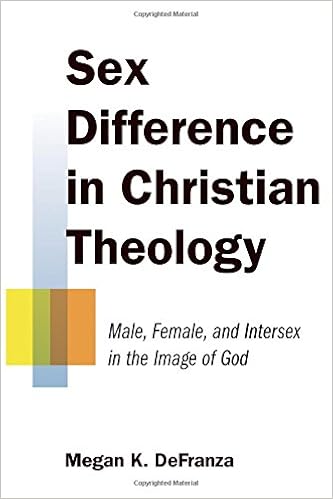

We need to say, is Genesis giving us Adam and Eve as the ideal for all times and places? Or are we bringing those assumptions to the text? I think, too, about racial difference. If we're trying to get back to Adam and Eve, we'll lose racial difference. And yet we don't just have Genesis. We have a whole canon that ends with this glorious vision of every tribe and language and nation gathered before the throne and worshiping. We have racial difference, not in Eden, but in the new creation. I think we're trying to ask too much of Genesis 1, 2, and 3 to give us all of God's blueprint for a good creation and anything that doesn't fit there is a result of the fall. I think that's a false reading. I think it's the beginning of the story, but there's so much more that God has done in the scriptures and in creation that we need to consider.
Like Noll, Megan DeFranza checks all of the Evangelical boxes. She grew up in a conservative Evangelical context, managed a couple of masters (Theology and Biblical Languages) at Gordon-Conwell before getting he Ph.D. in Religious studies, and speaks fluent Evangelicalese. She understands her current calling to be bridge-building between conservatives and intersex people. And yet this book smashes headlong into nearly all of the basic Evangelical assumptions about the nature of sex and gender. Sex Difference in Christian Theology meticulously examines the current science on how bodies are formed and what contributes to the ways in which doctors and scientists assign gender and sex labels to individual persons, and in that light critically (using fully approved Evangelical exegetic techniques) examines the witness of the Bible concerning gender and sex. The result for an Evangelical who reads the book with an open, yet still critical, mind is likely to be the crumbling, not of the book, but of his own understanding of what the Bible does and does not actually have to say about the meaning of physical sex and about gender. Having been disarmed by her passion and care for Scripture, the Evangelical will soon be alarmed to discover just how many of his beliefs on this subject were little more than assumptions—and weak assumptions at that.

How about you?

Are there any books you would like to add to the list. Leave them in the comments section together with a brief explanation.


Thursday, April 6, 2017

Why We Need Artists or: Why Modernists are Letting their Guard Down


Eve L. Ewing has written an Op-Ed over at the New York Times reflecting on the penchant of authoritarian regimes for censoring and controlling the arts. While I think the article wrings its hands a little too much over the Trump administration's move to cut the National Endowment for the Arts (there is a significant difference between cutting government funding and outright censorship and control) the piece is well worth reading for its straightforward and elegant apologetic for the arts in a democratic society. She argues that artists, and particularly avant-garde artists, play a crucial role in critiquing the norms and institutions of a given society. Given the value authoritarian regimes place on defending established norms and institutions, it is unsurprising that authoritarians generally react against our more prophetic artists.

The piece has me thinking about the overall role that artists play in human society. Well beyond offering important critiques of existing power structures and institutions, I want to suggest that artists are able to communicate a consciousness of the world which is not fundamentally reducible to propositional language. My favorite example of this is the story that, when asked to explain the meaning of The Wasteland, T.S. Elliot replied by reciting the poem itself—art can be discussed and explored, maybe even understood, but it cannot be fundamentally deconstructed. Along these lines, I have become more and more convinced of late that we have both direct and modeled experiences of reality—let's call the modeled experiences physical and the direct experiences metaphysical as they do not require a sensory model. I suspect that we experience the world more fully than our five senses can adequately process or than our mental models can represent. And art, of nearly any type, communicates on both the physical and metaphysical level. Either that, or by being an unfamiliar representation of the familiar, art confronts us with the artificiality of our own model of reality, thereby shocking us into some sort of greater contact with reality as such. 

Or I could be entirely wrong about that. 

Either way, the fact remains that art is able to make an impression on us which prose and reason find far more difficult. The philosopher Peter Kreeft compares art, poetry, humor, and music to the burglar who sneaks past our critical thinking to take up unexamined (or at least, far less-examined) habitation in our minds. From the perspective of most philosophers. mentors, parents, and teachers this makes art exceptionally dangerous and exceptionally powerful. Art bypasses all of the carefully trained resistances we have against bad thinking and fallacious logic. And, of course, so it is. We cannot combat the negative influence of bad or evil art by critical thinking; it is, to quote Dr. Kreeft again, dark magic. And the only solution to dark magic is good magic—good art (total side note but is it any surprise that Evangelicals who, with a few notable exceptions have proved unable to produce much beyond the most anemic art, feel that they are losing a great culture war?). This has resulted in a considerable amount of hand-wringing on the part of those who hope to keep bad beliefs out of the heads of good people. And for good reason.

But I think there is a serious mistake we frequently commit when we start to worry about the powerful impact of art on our own minds; and I think that it is a modernist mistake. We tend to believe that truth comes from logic or reason and that any other communication represents, at best, a short-cut or an attempt to make the experience more palatable. Put another way, we believe that reason=truth and art=emotions.This is, as I have said, a mistake—for a number of reasons. First, it is a mistake because it fails to recognize that there is truth which cannot be reduced to rational propositions (if there weren't then the cosmos would be fundamentally reduce-able to a perfect mathematical model and I don't accept that it is), it amounts to a claim that our constructed models of reality can be tested for "truth" but gives up on the possibility of a more basic, more absolute Truth against which those models might be judged. Second, it is a mistake because it overvalues our capacity to recognize bad reasoning. If the recent elections and the ensuing brouhaha over legitimate and illegitimate news sources, or the crisis of internet polarization and sloppy reasoning have taught us anything, it is that the Dunning-Kruger effect and confirmation bias are far more powerful that any 18th century rationalist or empiricist would ever want to accept; a guard who can fulfill her duties is a great thing, but putting our trust in a guard whom we know to be only semi-competent at best is simple foolishness. And the fact of the matter is that with all of our careful reasoning and critical thinking, the rational guards on our minds are semi-competent at best. Wisdom demands that we recognize our own rational limitations and work within them rather than pretending that our critical faculties are able to perfectly sort good reasoning from bad.

And yet we can't and won't simply throw in the towel and accept an existence wherein we stop evaluating all experience for Truth. 

This, too, is a book of Truth
I want to suggest that we are left with only one option. We need to allow it all. We need the artists, the poets, the painters, the singers, and the story tellers with all their silver lies and golden Truths. And we need the Mathematicians and the physicists with their known unknowns and their limited models of reality. The quest for Truth cannot be avoided—to avoid it is to surrender—and the fight for Truth cannot be restricted to a single arena—that would be to invite summary defeat from another arena. Our approach must be mixed, it must be complex, and it must be alive. We need to ask about the aesthetics of our proofs and much as we ask about the logic of our dance. We are whole persons living in a real world. No partial measures will do.

Friday, March 27, 2015

A Christian Defense of the Gender Identities of Transgender Persons - Part 2

My separate series in defense of LGB relationships starts HERE
My post in defense of Intersex persons is HERE

In the scenario I suggested in my previous post, Wanda has both a claim and a request which raise three questions: Is Wanda’s claim meaningful (is it possible in principle that Wanda is correct in her claim)? Is Wanda’s claim true? And would the fulfillment of Wanda’s request be sinful?
Peter Kreeft isn't always right,
but he is always awesome.

It is clear to me that Wanda’s claim is meaningful. As a human person and a Christian, I experience myself as both male bodied and of masculine gender. As a matter of faith, I believe that at the death of my body, my self will persist in a non-corporeal form awaiting the resurrection of the body. To quote the Catholic philosopher Peter Kreeft, “Sex is between the ears before it is between the legs. We have sexual souls. and “Rather, in every soul there is—to use Jungian terms—anima and animus, femaleness and maleness; just as in the body, one predominates but the other is also present. If the dominant sex of soul is not the same as that of the body, we have a sexual misfit, a candidate for a sex change operation of body or of soul, earthly or Heavenly. Perhaps Heaven supplies such changes just as it supplies all other needed forms of healing.”(1)
 
Now I suppose the claim that we humans have a gender (or as Kreeft puts it, “sexual soul”) which is ontically distinguishable from the sex of our bodies, is one that can be attacked on philosophical grounds. A strict materialist, for instance, would deny that we have souls at all(2). But there is certainly no direct Biblical passage which would immediately contradict the claim. Consider for following propositions:

  1. Persons are comprised of both soul and body
  2. Souls are sexed (masculine and feminine are meaningful descriptions of souls)
  3. Bodies are sexed

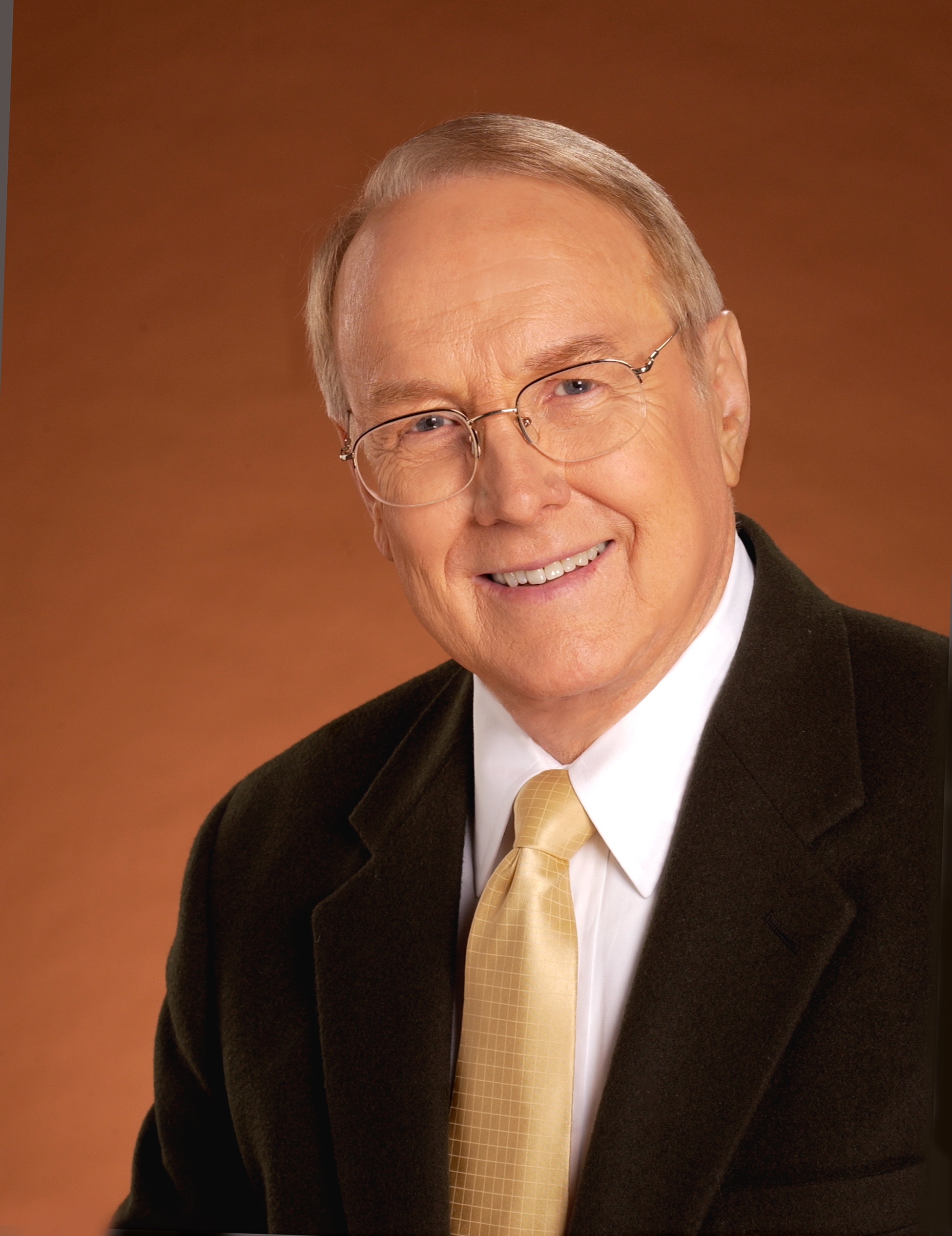
Even Dr. Dobson should like my
propositions. See, he's smiling.
So far as I can tell these should not be problematic claims for even the most conservative evangelical; after all the Bible uses gendered language when it speaks of the incorporeal dead(3). Yet, if you agree with these three propositions(4), it is not, in principle, problematic to claim that a person’s soul and body may not correspond. Certainly you will find nothing in the Bible to contradict the claim.
 
So Wanda’s claim is meaningful, but is it true? I have shown that Wanda’s claim is possible and I maintain(5) that the Bible does not forbid her conclusion. This means that as her pastor, we must decide whether or not to trust her account of her soul. Given that she is the only person (other than God) who is able to know her soul directly, she is the only person who can verify her own claims, the hypothetical(6) pastor will probably feel a bit like Peter or Susan when they went to talk to the old Professor about Lucy’s claim that she had discovered another world in one of his wardrobes:


‘Logic!’ said the Professor half to himself. ‘Why don’t they teach logic at these schools? There are only three possibilities. Either your sister is telling lies, or she is mad, or she is telling the truth. You know she doesn’t tell lies and it is obvious that she is not mad. For the moment then and unless any further evidence turns up, we must assume that she is telling the truth.’


 Just as with Lucy, either Wanda is telling lies, and does not actually experience herself as feminine, or she is mad, or she is telling the truth. If the pastor’s experience with Wanda, suggests that she is not a liar, then simple Christian charity rules out that possibility. And here we are on familiar ground since many of the arguments Christians make against the recognition of transgender people in their perceived gender identities, are based on a claim that transgender people are somehow deluded and insane. One sees many references to the fact that what is currently described in the psychological literature as “gender dysphoria” was previously categorized as “gender identity disorder”(7).
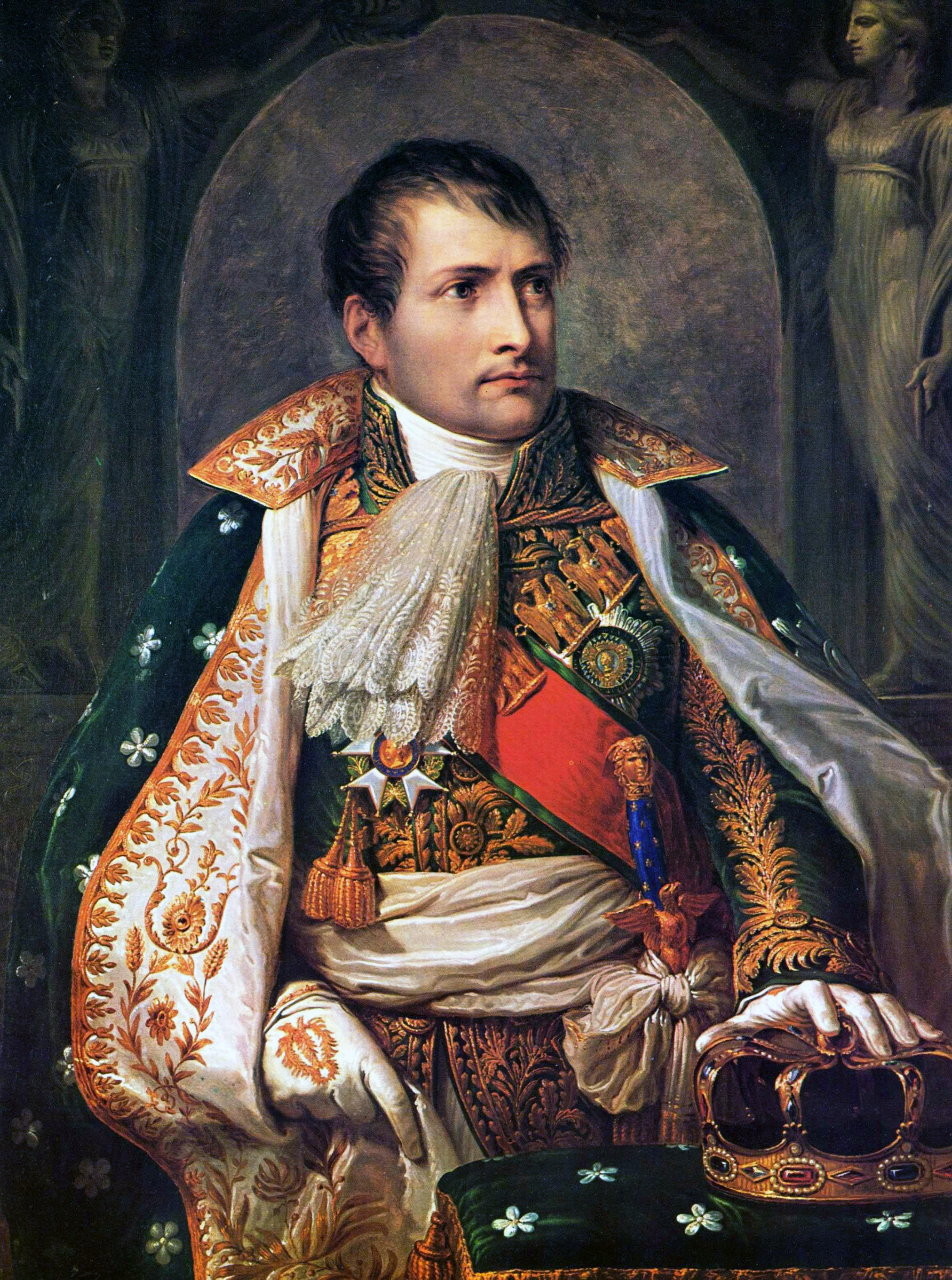
This is not you.

But the claim that Wanda is insane is unsustainable. Transgender people do not behave in the ways that delusional people do. In general, people suffering from gender dysphoria exhibit exactly the symptoms psychologists would expect with people who are forced to play an alien role for an extended period of time while facing the threat of alienation from their communities. They do not exhibit the symptoms and behaviors associated with people who believe themselves to be Napoleon Bonaparte or a boiled egg. In short, transgender people do not act like crazy people, they act like incredibly stressed and oppressed sane people. The only “crazy” thing about transpersons is the fact that they claim a gender at odds with their physical sex but since that is specifically the claim we are investigating, it would be begging the question(8) to take that as evidence of insanity or delusion.
Love believes all things.

Which means that the pastor is compelled by logic and charity, to conclude that Wanda is telling the truth, that she is a person whose soul is feminine and whose body is masculine(9).

With this established, the law of Christian liberty, together with the abundant evidence that Wanda will be psychologically harmed by a refusal to recognize and relate to her as a woman, suggests that the sinful choice would be for our hypothetical pastor to refuse Wanda’s request. If our pastor is a complementarian, refusal would be further problematized by the fact that it would effectively force Wanda to act against her “proper gender role”.

In my next post I will address the Scripture passages (or lack thereof) which pertain to this subject. I look forward to discussion in comments.

Part 3 is available here.

(1) Both quotes are from the essay Sex in Heaven by Peter Kreeft
(2) though they will often maintain that gender is a social construct which may or may not “fit” the psychological experience of a given individual.
(3) Luke 9 and Luke 16 for instance.
(4) If you disagree please speak up in comments!
(5) It is foolish to try to prove a negative so if you have an argument that the Bible does forbid acceptance of Wanda’s claim, please draw my attention to it and I will respond.
(6) but often enough very real
(7) This is usually accompanied by extensive hand-wringing over the apparent "liberal capitulation" of the psychological community.
(8) circular reasoning
(9) There is a great rundown of the evidence for this over at Debunking Denialism.

Friday, October 21, 2011

Variations on a Theme by Shakespeare, Lewis and Kreeft

2019 Update: I am still wrestling with the core concepts I explored in this piece. If you want to read more about my thoughts on post modernism, modernism, and pre modernism you can find some of that HERE.

I was playing with different topics today and it occurred to me that I have not yet explained this blog's title. I have hinted at it and I think I may have even used it somewhere (though I can't find the post off hand) but I haven't ever posted on why I call it "Heaven and Earth Questions". In Hamlet when Horatio sees the ghost he is confounded more because ghosts don't fit into his understanding of the world, than because of any normal fear of ghosts. Hamlet responds with : "There are more things in heaven and earth. Horatio, than are dreamt of in  your philosophies." I read Hamlet quite a few times with out ever noticing that line. In fact, the line was pointed out to me by Dr. Kreeft in one of his lectures (he uses the line quite a bit and at this point I have no idea which lecture I heard it in first so let me just give him general credit).

Dr. Kreeft's point, building off of C.S. Lewis' work on the character and weaknesses of modernism as well as his own work, is that there are really only three possible relationships between an individuals epistemology (the study of what is know and how it can be know) and ontology (the study of being or of what is). Either there are more things in heaven and earth (in reality) than are dreamt of in their philosophy (their epistemology), there are the same number of things in heaven and earth than are dreamt of in their philosophy, or there are fewer things in heaven and earth than are dreamt of in their philosophy. Crudely speaking - and I am already anticipating a few grumpy notes from post-modernists out there- the post-modernist holds that there are fewer things; the modernist, that there are the same number of things; and the pre-modernist, that there are more things in heaven and earth. 


For the post-modern, reality is a really tricky concept (and possibly an entirely meaningless word) to begin with. The post-modern approach tends to downplay reality as unknowable and therefore unreal. For many, many reasons, they have abandoned anything like a correspondence theory of truth (truth is when a proposition corresponds to reality) and then operate out of a desire to establish ones own "working" reality which they seem to simultaneously think must also be a fundamental illusion. However it plays out it will work out to a belief that reality, to the extent that it is a meaningful word, is smaller than the conceptions of each individual.


The modernist holds on to that initially exciting yet ultimately deadening idea that human achievement will one day be able to explain absolutely every aspect of reality and offer something like a scientific proof to verify those explanations. You hear lines like "if science can't prove it then it doesn't exist" from them. Here in America we have a very common religious form of this modernism which claims instead "if the Bible doesn't prove or affirm it then it isn't real". Both are modernist by this model. The claim boils down to the belief that human reason is capable of explaining or describing every aspect of being; that there are exactly as many things in heaven and earth as are dreamed of in philosophy. Thus prior to meeting the ghost, Horatio is a sort of proto-modernist.


But the pre-modern believes that there are more things in Heaven and Earth than are dreamt of in his philosophy; that reason works but isn't comprehensive. The pre-modern believes there is more to the world than what we can figure our. This does not mean (as I find many athiest apologists have construed it) that the pre-modernist gives up on trying to understand or that they believe that reality can't be known. "It is the glory of God to conceal a thing; but the honour of kings is to search out a matter." (KJV) Instead, the pre-modernist believes that there is always going to be more to know, that reality is fuller, more complex, more meaningful, more beautiful than we can comprehend - there will always be more to discover.

That is why I named the blog "More things in Heaven and on Earth". By now you must know that I am, or at least am trying to become, a pre-modern. Thus the title reflects my belief in infinite depth and breadth of the universe, of reality, of the cosmos, of the question and of the answers. There is bottomless joy in the search for truth because the truth is always being found and will never be exhausted.

Thursday, August 25, 2011

And They'll Know We are Christians by our.....Vitriol?

My apologies for the lateness of this week's post. I have been somewhat overwhelmed because I got a new job this week (cheers all 'round) and have been so busy celebrating that I haven't been able to sit down and put my thoughts to keyboard.

Last week I got my first-ever topic recommendation from a reader. I suspect that the particular observations in the e-mail I received were a result of our having officially (because I said so) entered election season 2013. At least we have on the republican side of the aisle. No, No! don't go away. I promise this is not going to be a post on politics; or at least not exactly. My correspondent commented that he has a number of Christian friends on different sides of the political spectrum - so far so good and a lot more than I could say back when I lived in the Bible belt. I, for one am hugely in favor of Christians not being tied to any particular political ideology, I have my own political opinions and I would hope that each of you have yours but I don't think that good things come from a giant, conglomerate, homogeneous, religious-political-moralist group think.
 
Unfortunately, things go downhill from there. It seems that these politically heterogeneous Christians are engaging the political world with all the vitriol, and blinders we have come to expect from [insert your least favorite media outlet here]. Or maybe more. Each group seems to have chosen a favored demagogue or two and will defend that demagogue with all the loyalty and ardor we might hope to see directed towards the rest of the Kingdom of Heaven.
 
Of course it needs to be pointed out that this attitude is not restricted to the Church. Nearly all media outlets seems to have spent the last few years lamenting the lack of civil political discourse in this country (not that I think we ever had much of a hold on it). So yes, Christians are not the only ones who can be downright hateful and nasty when it comes to talking about politics. But I seem to recall something about "By this all men will know that you are my disciples, that you love one another" and somehow political, rhetorical venom doesn't seem to fit into this description. It has also been observed that this sort of approach to political discussion doesn't really reflect any of the improvements we are supposed to look for in people who have asked the Holy Spirit to start working on them. Putting aside love for a second, when was the last time you heard a political conversation between two Christians on opposite sides of the aisle which was just brimming full of joy, peace, patience, kindness, goodness, faithfulness, gentleness and self control?
 
Now maybe this just has to do with our culture's loss of ability to engage in any sort of discussion or disagreement. But even if it is, shouldn't Christians at least try to correct the error?


But I suspect that the real problem for Christians in this arena is how clear it always is that the other side is not just mistaken, they are nearly always disastrously mistaken and quite possibly thoroughly evil. After all those people can't possibly be "real Christians" - never mind that we are under even more stringent orders to love people who aren't part of the family yet - why "they" want to rob the poor, or destroy the family, or kill babies, or institute anarchy, or create a dictatorship or, or, or, or.....
 Or maybe, just maybe it really is more important to love one another than it is to be vindicated in our opinions, even if those opinions are true. So let me end by pointing to a couple of role models. One of the things I have noticed recently about my hero, C.S. Lewis and his best disciple Peter Kreeft is that both  engage in fierce dialogue and dispute without once giving the impression of disrespect or ill-will for their opponents.

Maybe we ought to take a lesson from Pascal; a friend of mine recently drew my attention to the following:
"When we wish to correct with advantage and to show another that he errs, we must notice from what side he views the matter, for on that side it is usually true, and admit that truth to him, but reveal to him the side on which it is false. He is satisfied with that, for he sees that he was not mistaken and that he only failed to see all sides. Now, no one is offended at not seeing everything; but one does not like to be mistaken, and that perhaps arises from the fact that man naturally cannot see everything, and that naturally he cannot err in the side he looks at, since the perceptions of our senses are always true." - Blaise Pascal, Pensees


Have you found an effective way to enter into genuinely courteous dialogue with other people on political subjects? Do you just avoid talking about politics because it "always gets ugly"? What is your strategy?