Search This Blog

Showing posts with label Philosophical Anthropology. Show all posts

Friday, March 27, 2015

A Christian Defense of the Gender Identities of Transgender Persons - Part 2

My separate series in defense of LGB relationships starts HERE
My post in defense of Intersex persons is HERE

In the scenario I suggested in my previous post, Wanda has both a claim and a request which raise three questions: Is Wanda’s claim meaningful (is it possible in principle that Wanda is correct in her claim)? Is Wanda’s claim true? And would the fulfillment of Wanda’s request be sinful?
Peter Kreeft isn't always right,
but he is always awesome.

It is clear to me that Wanda’s claim is meaningful. As a human person and a Christian, I experience myself as both male bodied and of masculine gender. As a matter of faith, I believe that at the death of my body, my self will persist in a non-corporeal form awaiting the resurrection of the body. To quote the Catholic philosopher Peter Kreeft, “Sex is between the ears before it is between the legs. We have sexual souls. and “Rather, in every soul there is—to use Jungian terms—anima and animus, femaleness and maleness; just as in the body, one predominates but the other is also present. If the dominant sex of soul is not the same as that of the body, we have a sexual misfit, a candidate for a sex change operation of body or of soul, earthly or Heavenly. Perhaps Heaven supplies such changes just as it supplies all other needed forms of healing.”(1)
 
Now I suppose the claim that we humans have a gender (or as Kreeft puts it, “sexual soul”) which is ontically distinguishable from the sex of our bodies, is one that can be attacked on philosophical grounds. A strict materialist, for instance, would deny that we have souls at all(2). But there is certainly no direct Biblical passage which would immediately contradict the claim. Consider for following propositions:

  1. Persons are comprised of both soul and body
  2. Souls are sexed (masculine and feminine are meaningful descriptions of souls)
  3. Bodies are sexed

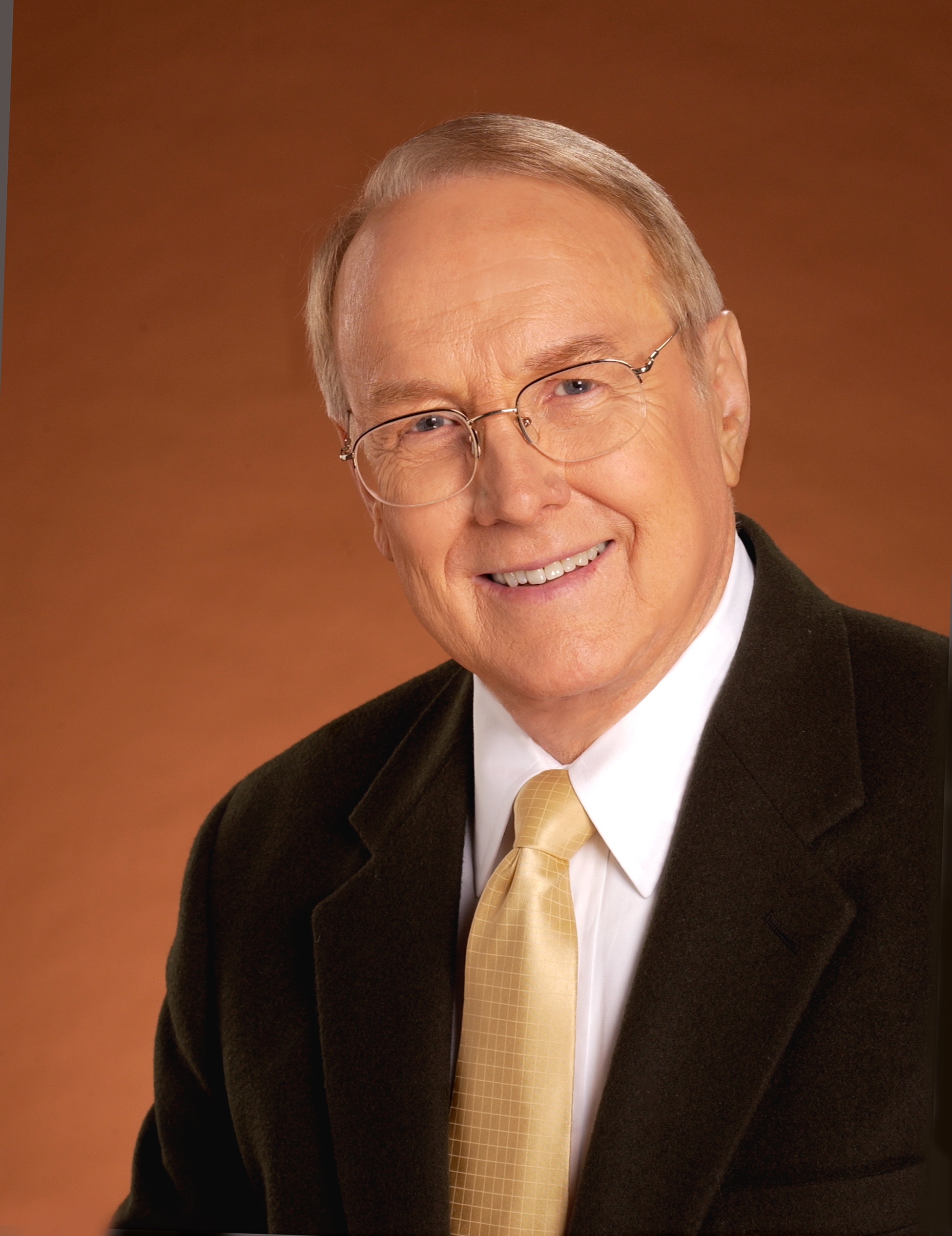
Even Dr. Dobson should like my
propositions. See, he's smiling.
So far as I can tell these should not be problematic claims for even the most conservative evangelical; after all the Bible uses gendered language when it speaks of the incorporeal dead(3). Yet, if you agree with these three propositions(4), it is not, in principle, problematic to claim that a person’s soul and body may not correspond. Certainly you will find nothing in the Bible to contradict the claim.
 
So Wanda’s claim is meaningful, but is it true? I have shown that Wanda’s claim is possible and I maintain(5) that the Bible does not forbid her conclusion. This means that as her pastor, we must decide whether or not to trust her account of her soul. Given that she is the only person (other than God) who is able to know her soul directly, she is the only person who can verify her own claims, the hypothetical(6) pastor will probably feel a bit like Peter or Susan when they went to talk to the old Professor about Lucy’s claim that she had discovered another world in one of his wardrobes:


‘Logic!’ said the Professor half to himself. ‘Why don’t they teach logic at these schools? There are only three possibilities. Either your sister is telling lies, or she is mad, or she is telling the truth. You know she doesn’t tell lies and it is obvious that she is not mad. For the moment then and unless any further evidence turns up, we must assume that she is telling the truth.’


 Just as with Lucy, either Wanda is telling lies, and does not actually experience herself as feminine, or she is mad, or she is telling the truth. If the pastor’s experience with Wanda, suggests that she is not a liar, then simple Christian charity rules out that possibility. And here we are on familiar ground since many of the arguments Christians make against the recognition of transgender people in their perceived gender identities, are based on a claim that transgender people are somehow deluded and insane. One sees many references to the fact that what is currently described in the psychological literature as “gender dysphoria” was previously categorized as “gender identity disorder”(7).
This is not you.

But the claim that Wanda is insane is unsustainable. Transgender people do not behave in the ways that delusional people do. In general, people suffering from gender dysphoria exhibit exactly the symptoms psychologists would expect with people who are forced to play an alien role for an extended period of time while facing the threat of alienation from their communities. They do not exhibit the symptoms and behaviors associated with people who believe themselves to be Napoleon Bonaparte or a boiled egg. In short, transgender people do not act like crazy people, they act like incredibly stressed and oppressed sane people. The only “crazy” thing about transpersons is the fact that they claim a gender at odds with their physical sex but since that is specifically the claim we are investigating, it would be begging the question(8) to take that as evidence of insanity or delusion.
Love believes all things.

Which means that the pastor is compelled by logic and charity, to conclude that Wanda is telling the truth, that she is a person whose soul is feminine and whose body is masculine(9).

With this established, the law of Christian liberty, together with the abundant evidence that Wanda will be psychologically harmed by a refusal to recognize and relate to her as a woman, suggests that the sinful choice would be for our hypothetical pastor to refuse Wanda’s request. If our pastor is a complementarian, refusal would be further problematized by the fact that it would effectively force Wanda to act against her “proper gender role”.

In my next post I will address the Scripture passages (or lack thereof) which pertain to this subject. I look forward to discussion in comments.

Part 3 is available here.

(1) Both quotes are from the essay Sex in Heaven by Peter Kreeft
(2) though they will often maintain that gender is a social construct which may or may not “fit” the psychological experience of a given individual.
(3) Luke 9 and Luke 16 for instance.
(4) If you disagree please speak up in comments!
(5) It is foolish to try to prove a negative so if you have an argument that the Bible does forbid acceptance of Wanda’s claim, please draw my attention to it and I will respond.
(6) but often enough very real
(7) This is usually accompanied by extensive hand-wringing over the apparent "liberal capitulation" of the psychological community.
(8) circular reasoning
(9) There is a great rundown of the evidence for this over at Debunking Denialism.

Wednesday, February 11, 2015

The Absurdity of Opposing Trans People: A Stern but Necessary Reply


 For those of you who were unaware, Mr. Carlos D. Flores recently published, what I consider to be, a damaging and insulting article at The Public Discourse on the topic of transgender persons. The following is my reply:


Mr. Flores:

I would like to begin by addressing what I see as the larger, more fundamental assertions you make in your article The Absurdity of Transgenderism: A Stern but Necessary Critique before I go on to respond to the more specific points you made throughout.

First, you seem to be operating under the assumption that a person’s gender is both obvious and static. Unfortunately I can not find a single place in your article where you defend either of these assumptions. How do you think a person’s gender ought to be determined?
 
In an effort to help you answer this question, let me present you with some of the common methods for determining a person’s gender:
  1. One’s own self-perception: Clearly you reject this possibility, apparently on the grounds that “those people are wrong and do not recognize reality” (my paraphrase of your “Why think that what one “identifies as” is significant at all, especially to the extent that others should actively recognize or cater to such an identity, and especially when the identity one adopts is contrary to reality?” if this is an unfair paraphrase please correct me). If you want to assert that a person is wrong, that assertion ought to be demonstrated - but you have declined to do so.
  2. Biological Sex: At first blush it would seem that this is the method you prefer. However, within your first few paragraphs, you state that one cannot change one’s gender by surgical alteration of one’s body. If that is the case then you must not believe that our genders are determined by our biological sex (our bodily characteristics) as that would imply that a change in biological sex would indeed result in a change of gender.
  3. Brain Structure: You rejected this possibility near the end of your article, arguing that DNA trumps brain structure/chemistry and that brain structure can change, which leads me to:
  4. DNA: I am inclined to think that this is your preferred method but if so, it is quite problematic. You reject the relevance of intersexed persons in this debate, but surely you see that the existence of people whose genes do not mark them as obviously male or female makes it impossible for DNA to serve as an absolute determiner of gender. Essentially what you are saying (if you are indeed claiming that our genders are determined by our genes) is that you have discovered a rule by which reality may be judged despite the fact that, by your own admission, that rule fails to function 100% of the time. Sometimes, as in the case of Klinefelter syndrome wherein a person possess XXY genes rather than simply XX or XY, a person’s gender is not evident on the basis of a DNA study. Yet you want to maintain that when DNA “works properly” the case is clear. Surely you see the problem? If you admit that DNA is not an absolute measuring stick, then you must be using some other device to judge the outcome of a genetic reading - This principle goes back at least as far as St. Thomas Aquinas’ fourth argument for the existence of God: comparison is impossible without a perfect standard -. If you are using another device, then DNA is not your actual measuring stick.
  5. The Soul:  I can’t imagine that this is your method as the person most qualified to determine a soul’s gender would be the proprietor of said soul, and you have dismissed out of hand the idea that we ought to accept a person’s self-perception as definitive.

Those are all the common methods I am aware of. You see where this is very frustrating? You have claimed that a person’s “real” gender is obvious; and yet you provide no viable means for determining said gender. Your total approach seems to be (I hope I have misunderstood you here) that a person’s gender is what happens to strike and outside observer as “obvious”. But surely you will concede that many things which seem obvious at first blush, turn out to be anything but on closer inspection.
 
Having begun with an argument which boils down to “transgender people are wrong about their gender identity because their claim seems contrary to my assumptions” you then proceed to exert substantial effort equating the very real claims of transgender persons with the hypothetical claims of: 1 - A caucasian man who identifies as a person of Sub-Saharan African descent and has himself surgically altered to resemble your idea of how a person of Sub-Saharan descent ought to look. 2 - A seventy year old man who identifies as a sixteen year old. 3 - An anorexic man. Your claim is that the first two are “perfectly analogous” to the case of a transgender person. They are not.
 
At their roots, both of these analogies, if taken as arguments, beg the question. You claim that they are analogous because gender, age, and ethnicity are all matters which one person can determine for another. As I have already shown, you have not even defended that claim with regard to gender (and I deny it). I will grant it in regard to age, and plead ignorance with regard to ethnicity, which is hard for anthropologists to draw black and white lines around, and race, which is proving just as fuzzy to the geneticists. So you are attempting to show by analogy, that it is ridiculous for trans persons to identify with a gender other than the one you claim they were born with, and for your analogies to work, you must assume that trans persons have no legitimate basis for identifying with a gender other than the one you claim they were born with. Thus your analogies only hold up (and even then only poorly) if we grant your conclusion as a premise.
 
Because they are circular in this way, I think you are in very real danger of reifying an unsubstantiated position in the minds only of those already inclined to agree with you - those who see the claims of transgender persons as absurd or far fetched - without actually convincing anyone who disagrees with your major premise/conclusion. Such an outcome would serve only to exacerbate polarization while complicating dialogue and the search for actual truth on this issue - an outcome which your concluding paragraphs convince me you are eager to avoid.
 
With your third analogy (that of the man with anorexia) you are on even weaker footing. In the case of anorexia, the individual legitimately thinks that their body is overweight when, in fact, it is demonstrably underweight. Whereas a transgender person, knows their body to possess sex characteristics which contradict their perceived gender. Thus an anorexic person will claim, “my body is problematically overweight” when you would contend that they are thin, where a transgender person will claim “my body is problematically male” when you would contend that they are male. In short, a transgender person (who has not undergone either hormone replacement therapy or sexual reassignment surgery) would agree with you about the sex of their body, where an anorexic person would not agree with you about the weight of their body..
 
For the remainder, and with the preceding established, I will address your article point by point:

Regarding your claim that “gender reassignment surgery is not medicine”: 
First, you are setting yourself in opposition to the American Psychological Association as a well a host of other psychological groups in your assessment. Of course you are free to do so, but challenging the established medical and psychological authorities on the matter does shift the burden of proof to you in questioning the medical efficacy of SRS and hormone replacement therapy. Your assertion that post operative transgender persons are more likely to attempt suicide is, at best, a misunderstanding of the research you have cited. The link you provided in support of your contention actually maintains that SRS is effective as a treatment of “gender dysphoria” but that due to comorbidity factors, further psychological help is recommended. This is extremely problematic because, by misrepresenting the study you have cited you are, in effect, and hopefully unwittingly, exacerbating the problem the study has identified.
 
Furthermore, you imply that SRS is being offered to every child who exhibits discontent with their birth sex. In reality there is a complex and careful process which must be followed before a child is eligible for physical intervention in relation to gender dysphoria (Check out the American Association of Pediatrics for a good rundown on the subject).
 
So to answer your question: Yes, SRS is generally accepted by the medical establishment as an effective treatment of gender dysphoria.
 
Your next objection consists of a teleological attack on the concept of SRS as medicine. In this attack you assert that anything which deprives a bodily organ of its natural function, cannot possibly be described as medicine. I await your attack on amputations, mastectomies, hysterectomies, and the like. A significant body of medical practice involves depriving the body of a given organ’s function in order to preserve the health of the body as a whole, so I fail to see how your proposed definition of “medicine” can be consistent with modern, or even traditional, healing and medical practices.

You seem to be assuming that the body has a single purpose and that its purpose cannot be in conflict with the purposes of its members and organs. The assumption does not hold. I don’t have a particular problem with teleological thinking, but to suggest that a given organ or member is monolithic in its telos is overly simplistic. The hand is for grasping; but it is also  for manipulation, and for touch and exploration. The tongue is for chewing; but it is also for processing food, and for taste. Our sexual organs are indeed oriented towards reproduction; but they are also for pleasure, intimacy, and bonding. It often happens that one telos must be sacrificed for the preservation or achievement of others. Surely it is to the individual concerned to make that decision and no one else.

Regarding your section “On Gender Identity Disorder Therapy”:
First I want point out that your language in this section  is misleading at best. To my knowledge nobody is trying to ban therapy for transgender persons (unless you are referring to Dr. McHugh who shut down at least one form of therapy - SRS - at Johns Hopkins in 1979). The people hoping to enact “Leelah’s Law” want to end a specific and demonstrably harmful form of therapy. You may disagree with them, but to characterize it as an attempt to criminalize “gender identity disorder (the old term for gender dysphoria) therapy is a misleading generalization.
 
Second this whole section is a further example of begging the question. Your points would hold (to some extent, and once your language was tidied up) in defense of your conclusion, if your conclusion were not also your major premise (i.e. that people suffering from gender dysphoria are unaware of their “real” gender and should therefore be “helped” to see their “real” gender). But in order to claim validity, the argument must first somehow demonstrate that transgender persons are mistaken with regard to their “real” gender. As I have show, you have failed to do this.

Regarding your section “Some Common Objections”:
 The first paragraph in this section is the basis for my conjecture that you see DNA as the ultimate determiner of a person’s gender. If I have misunderstood you, I apologize but I was unable to find any indication - much less a direct statement - anywhere else in your article.
 
In response to your request for empirical evidence that transgender persons brains are structurally similar to the gender with which they identify, here is one study. However since you do not believe that brain structure is determinant of a person’s “real” gender (see above) I will spend no more time on this point.
 
As a minor tangent here, you seem to conflate sexuality with gender identity. They are distinct, sexuality is a reference to one’s sexual life, whereas gender identity refers to a person’s gender (masculinity, femininity etc…) Of course the two topics are related as one’s gender cannot help but have an impact on one’s sex life and sexual identification. But because I can say that I am male without implying much about my sexual practice, it is important to make the distinction.
 
Next you bring up the possibility that the existence of intersex persons might explode your claims. Your solution to this (very proper) suggestion is that a) the intersex population is very small - which it is, though you have under-represent their numbers by at a least a scale of magnitude check here and here - and b) most transgender persons are born with functional reproductive equipment. I fail to see how either of these facts are relevant to the question. Surely you must grant that if even a single person cannot, even in principle, be deemed male or female by your method of verification, then either your method or your metaphysics of gender must be flawed. Nobody would accept as reflecting reality, a scientific model which openly acknowledged exceptions to its rules. Such a model may be a worthwhile practical guide in some or even the vast majority of instances, but cannot be counted as determinant of basic reality. So yes, the existence of intersex persons does actually weigh heavily against any attempt to assert that gender is rooted in a person’s physical body.
 
To your second point, that most transgender persons are born with functional reproductive equipment, I must admit to some puzzlement. Of course that is true. I am not aware of anyone who denies it. But may I ask how it is possibly relevant? Transgender people aren’t claiming that their bodies are ambiguous. Quite the opposite, their claim is that their bodies unambiguously contradict their gender identities.
 
I am willing to grant your last objection. If the United States accepts the medical conclusions of the psychological and medical community, then you will indeed find yourself in the position of having your taxes spent on providing health care and equitable treatment for your fellow citizens, trans or cisgender. I suppose it will come down to who’s understanding of the truth will be recognized.


In Sum:
  Mr. Flores, I sincerely appreciate your desire that our society base it’s policies and actions on truth. I share that desire. Unfortunately I believe you have misapprehended the truth in this instance. Furthermore I would urge you to consider the serious suffering among transgender persons as well as their friends and families your words will cause if you are wrong, as I believe I have demonstrated you are.Ultimately your article provides no actual defense for its assertions and advocates damaging treatments while attacking therapies which have been shown to be helpful. I ask that you retract it immediately in the real interest of those very persons for whom we are both concerned.


Sincerely,

Bill Hoard

Saturday, April 7, 2012

In Defense of... Sadness?


Yesterday I spoke at church about Good Friday. I had plenty to say about the day and the event it commemorates but one particular item seemed worth discussing on Heaven and Earth Questions. I am terrible at mourning. I am great at Easter. On Easter we celebrate God's victory over death. We celebrate the greatness of God and the ressurection of the God-Man. We celebrate the return of Jesus. Easter is wonderful and Easter is easy Easter is about celebration. But Good Friday is much more confused. On Good Friday there is some celebration; we celebrate being rescued from death in its many forms. But for Christians Good Friday is also a day for sadness. 
 
We believe (yes I really do believe that the following is true) that that in order to rescue us from the death and brokenness of the world, God had to die. On Good Friday we remember the deicide that we necessitated. And as horrific as deicide (the killing of God) is, for most of the people in my community it is even more horrific. You see, being a Christian is about holding to certain propositions as true (check out Mere Christianity for the best listing, explanation and defense of these propositions I have ever run across). But I, and many people I know are interested in something else as well. We are invested in knowing the person who is Jesus. We are just nuts enough to think that we know Him in that tanimak sense. We each have a relationship with him. So for us, Good Friday is a day for remembering that our choices and actions brought about the horrific death of this person we love desperately. Good Friday is a day where we remember that sometime recently we as much as shouted "give us Barrabas" as we insisted on bringing a little more deaths or pain into this world - death and pain He died to heal. 

Good Friday is about being loved but it isn't exactly fun. 

Now I grew up in Turkey and over there they know how to mourn. They don't avoid it like the plague, like a mental illness. They embrace it when it's time comes. But we Americans, even those of us of a more pessimistic bent, seem fascinated by the positive. I certainly am. I know that I full on hate being sad and I don't think anybody wants to be depressed (including the Turks).
   
The thing is, I don’t think that mourning and being depressed are at all the same thing. Depression is an emotional manifestation of despair (though the person suffering from it has not necessarily actually reached a despairing conclusion), more precisely, it is the proper emotional correlative of the cognitive state we call despair. To despair is to acknowledge that there is no hope, no meaning in a situation or, in its final sense, life.
Now sadness is the proper emotional correlative of the cognitive state of mourning. And to mourn is to acknowledge that something wrong has happened, that some part of life or even life as a whole is in a broken state. To mourn is to recognize injustice (just made a mental not to do a blog on justice).

The distinction is vital because on the one hand, to despair is itself a great evil. To see the world as empty, meaningless and hopeless is to miss-see the cosmos and to devalue all other people. The old saw that ”so one as there is life, there is hope” is true on a cosmic scale. For a Christian despair is entirely absurd, it would mean giving up on God. So there is no proper context for despair and its correlative emotion: depression*. 
  
But there is a proper context for mourning. Injustice, the brokenness of the universe does happen, all is not healed yet and it is right for us see that, to acknowledge it. I’m still not going to go seeking the experience. I don't want to go find reasons to be sad. But when the time comes, as it does on Good Friday, to ”weep with those who weep” I hope that I will be able to. Maybe I will be better at it next year.
  
  *Please don’t read this as a slam on people who are suffering from depression, they are dealing with one of the injustices for which we are to mourn. The brokenness of the universe has caused them to feel inordinately, they have not made a bad choice but become subject to the weakness or our bodies and brain chemistry.

Thursday, March 22, 2012

Don't Judge Me

"Don't Judge Me", together with "I'm not Judging" is a phrase I am hearing more and more often, both in Christian and in secular circles. Now I think I get what people are trying to communicate and I suspect (please correct me if I am wrong in your case) that mostly "don't judge me" means "don't think badly of me". Which is a perfectly legitimate sentiment though it does seem to suggest that the speaker already thinks poorly of his own actions or opinions. What worries me is the fact that the two statements are being used interchangeably and I can't think of many reasons why that should be.

There may be an assumption that all judgement is negative. Which is odd, but no more so than many of the unreflected ideas we carry around most of the time. Of course some judgement can positive; even in popular culture we see judges giving encouraging reviews in all sorts of competition. On this interpretation, the phrase would seem to mean something more like :"don't think badly of me for doing the thing that makes me think badly of myself". And that is an old if largely indefensible sentiment. If I think that I am a very bad person, that does not mean that I want anyone else to think of me as a very bad person but it does mean that I have no good reason to ask anyone to think of me as better than I believe myself to be.
 
Alternately, I suppose someone could use "don't judge me" in a more precise way, they may really and impossibly, asking the world not to come to any conclusions about their actions. Maybe I used "impossibly" in haste, there may be some of you out there who can see a friend or acquaintance doing or saying the sort of thing for which they say "don't judge me" and not come to any conclusions about whether or not their actions are good or bad.
 I can't.

Fair warning to everyone I know: I judge you. I judge you all the time. Granted, I have judged most of you as being pretty cool folks but nonetheless, I am judging you all the time and I'm not likely to stop.
 
And if that weren't enough, I happen to think that my proclivity for judging is a good thing. As a matter of fact I have a lot of trouble even imagining a world in which stuff just happened and people just did things and I didn't have any opinion as to whether it was all good or bad. And I think that I'm in pretty good (and bad) company here.
 
Regardless of it's quality, my company is certainly numerous. Sartre and Nietzsche, even Hume all assumed that we are forever judging things, although they disagree with each other - and certainly with my own view - as to what judgments we ought to reach. Heck Nietzsche, who called for a re-imagining of all values, still seemed to believe (one is never on firm ground trying to insist that Nietzsche definitely believed any particular thing) that the strong should judge (albeit according to their own systems of value); while Sartre lamented that we are doomed to invent standards of judgement for ourselves and then live our lives knowing that they were essentially arbitrary. On the other side of things, C.S. Lewis (you didn't think I could write my first post in months without mentioning him did you) certainly believed that we are naturally prone to judge thoughts actions and speech. He believed that we judge the world by the Tao, the basic way of all existence, that the Natural Law was real and that good and wise people judge their environments as either conforming to or diverging from it.
 
And I think this draws out the important distinction between "don't judge me" and "don't think badly of me". Ignoring the possibility of positive judgement and granting for a second that the judgement in question would be negative, the disastrous assumption people seem to be making is that judging someone's actions or words to be bad means loving them or valuing them less. But that does not follow at all. I am fully convinced that I think, say and do bad things all the time. Go ahead and judge me, it's fine, just don't love me any less, don't value me any less for it. No matter what you think, you probably won't think that I am half as bad a person as I know myself to be, and I still value myself a lot.
 
You see, I think we have forgotten (both Christians and seculars) that there is no contradiction in saying that people have infinite value and terrible moral character. The two are not interdependent. The problem is that when we conflate judgement and love we end up losing either the ability to acknowledge reality (it was very bad for Bob to gossip to me about Henry), or we end up hating and devaluing beings of infinite worth.
 
So when people ask me not to judge them I have a bit of trouble. I guess you could say I'm judging you for asking me not to judge you. I just love you, that's all.

Wednesday, December 28, 2011

Confession of a Luddite Sympathist

 
It seems to me that if you are going to tell the world that modern technology and specifically social media type technology makes you uneasy, and you are going to say it on your blog, then you had better frame the statement as a confession. So here it is:

I confess - technological development makes me uneasy and I have a constant sort of background nervousness about what social media is doing to our ability to relate to one another in healthy ways.

And now for disclaimers: I do not actually disapprove of technology, I try hard to stay on top of technological development and I think that it offers great opportunities for good. My confession is one of inclination not of decision so while there is a little worried knot in my stomach every time some new device of website catches on, I go ahead and try to learn the tech and see what can be made of it.

Technology is essentially power. In fact it is an expression of power which is almost unique to humans (I think I remember that there are certain monkeys which do stuff with sticks and I heard somewhere that sea otters will hold on to especially useful "shellfish cracking" rocks). It is the manifestation of the power of thought, imagination and innovation and as such it really sort of deserves to be celebrated - all things are indeed glorious for being themselves.

I believe C.S. Lewis J.R.R. Tolkien and G.K. Chesterton each pointed out that the desire to develop technology is a manifestation of the same desire which leads people to try magic (Lewis has some really great things to say about this in The Abolition of Man). The technologist and the alchemist are the right and left hands of the same impetus. In fact when you get right down to brass tacks definitions it becomes surprisingly difficult to differentiate between the two. The major difference is that technology has worked while magic hasn't.

The problem is that technology is power - and exponentially increasing power at that - in the hands of a species with questionable moral character. Power only increases an individual's ability to do what they want to do, to "enacting their will on the world" as the philosopher would say. It is a good thing for a good person to enact their will on the world, but conversely it is a bad thing for a bad person to enact their will. And technology itself does not discriminate between good and bad, it simply amplifies. Technology makes bad people more able to do worse things and good people more able to do good things.

I think that Facebook gives a useful example. Facebook (together with other social media) has enable people to organize and topple repressive regimes. I take this to be a good thing, although I have not always been pleased with the "new boss", but that is another post. At the same time, I believe that Facebook (again together with other social media) has enabled people to create illusory relationships which save them from the difficulty and ultimate satisfaction of forging real relationships. It allows for someone to become increasingly antisocial without feeling as many of the negative effects of actually being alone.

All of this is because technology essentially amoral. It is not immoral, for then it could not serve and especially not amplify the good that it is so often used for. Neither is it moral, for then it could not be used in the service of harming people as it has so often been. Technology is a catalyst, an amplifier, to stake out yet another "mushy middle" position, it is what you make of it.

But maybe things are not quite so simple as that. As Spiderman is wont to remind us, "With great power comes great responsibility". We need to ask ourselves whether we are able to handle that sort of responsibility. After all, there was a time when the worst mankind could do with its power was to kill itself off. This would have been a bad enough thing and we managed to be responsible enough not to do it. But now, with much greater power, we carry much greater responsibilities. We now have the power to reduce our entire planet to a glowing slag heap, ending nearly all life; and we are responsible for how that power is going to be used.

So the question "is technological development a good thing?" turns out to be the question "is it a good idea for beings like us to be more powerful?" and our answer will have to depend on whether or not we think that human beings ought to be trusted with this much power. And this is a hard question to answer because in reality we all clearly observe that humans, both collectively and individually, are both incredibly evil and shockingly good. We are beings of unimaginable glory and holiness who have become corrupted and evil. We are just about as paradoxical a set of beings as can be imagines, veritable gods who have become demons and still aspire to godhood what the Greek Orthodox call Theosis. We are the only species that could have produced bothe Mother Teresa and Hitler and that species tension is at work in each of us. Indeed, to go back to C.S. Lewis, one of those two must be our ultimate destiny:

"It is a serious thing to live in a society of possible gods and goddesses, to remember that the dullest and most uninteresting person you talk to may one day be a creature which, if you saw it now, you would be strongly tempted to worship, or else a horror and a corruption such as you now meet, if at all, only in a nightmare. All day long we are, in some degree, helping each other to one or other of these destinations." - The Weight of Glory

But then maybe a growth in human technological power is unavoidable, maybe whatever the answer to that question, we will still be faced with an inevitable increase in human power. So we might want to jump strait to another question: "how can we ensure that power is used responsibly? How can we keep from blowing up the world or turning the vast majority of the population into unthinking, consuming zombies?" After all, there are certainly people out there who project exponential and unavoidable technological growth over the next few years.

To my mind, the answer to these latter questions (I don't think that technological progress is something which can be effectively fought) is twofold: First we have to find a way to make people better - in spiritual terms we have to really focus on bringing the Kingdom of Heaven to Earth, we have to begin to really care about things like sanctification, maybe we need to go back and read James and Hebrews again. And secondly we need to never cease in doing good to the best of our own ability - and this must include the acquisition of the technological expertise which will enable us to become more effective peacemakers, more efficiently generous, more aware of the suffering that we are to be forever healing. After all, Spiderman works backwards as well: "With great responsibility comes the providence of great power" at least it must God was serious when He promised to provide everything necessary for the doing of His will.