Search This Blog

Showing posts with label Mysticism. Show all posts

Monday, December 18, 2017

The Person at the Center

As I have mentioned periodically on this blog, I am a fan of centered set theology. To go a little further, I am a fan of centered set theology to a degree that quite a few self-proclaimed fans of centered set thinking have told me that I take it too far. I am pretty much cool with that. I have already talked a good bit about what centered set theology is in this post in my Blue Ocean Reflections series, but for those of you who don't want to fall down an internet link-hole, I have posted a summary at the bottom of this piece. Feel free to scroll down and come back.

Related image

Which Jesus?

One of the most common objections I have seen to centered set theology is the question "yes but which Jesus?" Quite a few people have argued that centered set is all well and good, so long as it is bounded (see what I did there) by the correct understanding of Jesus, that is to say, so long as it is the "right" Jesus at the center of the centered set. When this argument is developed it turns out that this idea of the "right Jesus" is often a Trojan horse which can be used to smuggle in nearly any degree of bounded set confessionalism. What "the right Jesus" means, it turns out, is a more or less particular definition of who Jesus is. It is Jesus "as defined my the creeds" or "as presented in the New Testament" etc... In fact, it is Jesus, stripped of his actual existence as a person and reduced to a series of propositions. So long as a real relationship with a real and interacting person forms the heart of centered set theology, the system (while never easy for us) works well and is not really susceptible to the "which Jesus" critique since the answer is clearly and obviously "Jesus".  

This is where I think those who make the "which Jesus" critique have inadvertently tipped their hand. The idea that the Jesus at the center of the centered set needs to be defined in order for the model to hold, presupposes not a living, relational center, but a dead propositional center. It assumes a center who is not known but defined. And once the center is defined it must inevitably collapse into a more or less broadly bounded set instead. 

The whole problem with the critique isn't that it fundamentally undermines centered set theology as such (though it does), but that it reduces the Divine Person to a series of doctrinal propositions—it isn't bad theology, it is idolatry. Of course once they have substituted God-in-Christ for a series of propositions-about-God centered set theology cannot long survive, the living stone has been rejected and nothing can last long built on a shell or a corpse. The "which Jesus" crowd don't fail to understand centered set because of its flaws (though it certainly has them—it is a model of reality not reality itself and as such is imperfect); they fail to understand centered set because they have not yet broken free of that enlightenment modernist way of thinking which must reduce truth to proposition and thinking to machine logic. They fail to recognize the human and relational logic which sees the other as real, knows the reality of relationship, and knows reality through relationship. 

There is, there must be, a knowing of persons (but never of propositions) able to endure the most distorting of factual inaccuracies. Change every particular about a person you love, lose even your love for them as it turns to hate, and it will still be the same person to whom you are relating. Let me be wrong about everything I know about God, and it will still be God about whom I was wrong. 

This is the mystery at the center of centered set thinking: the center is never a what—always a who

Summary of the theory


Image result for centered set theory
Centered set theology exists in apposition to Bounded set theology. The bounded set spiritual model views all people as divided into two camps (sets), in or out; and usually a person’s position in this model is determined by whether or not they have a sort of mental assent to some series of propositions. In usually means that the person will go to heaven some day and out means that they won’t.  The centered set approach denies the in/out distinction in favor of orientation. The important question in this model is whether or not a person is oriented towards the center (in my circles this means oriented towards Jesus). In this model it is not so important to get people to cross lines and form new mental assent lists as it is to get people to notice and love Jesus, to orient their lives towards Him.

Monday, April 24, 2017

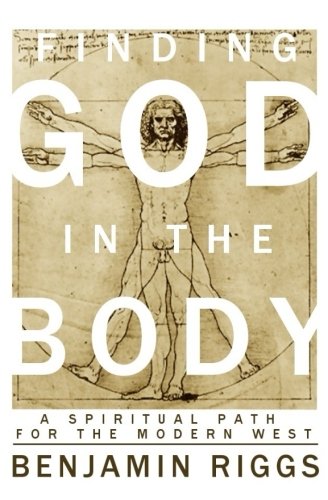
Finding God in the Body: A Review


Finding God in the Body by Benjamin Riggs is the book about almost everything my conservative Christians friends worry I might believe. That doesn't automatically make it a bad book (neither does it automatically make it a good one) but it certainly made for an interesting read. On one level, Finding God in the Body is a well written, frequently insightful book containing some really useful spiritual practices and perspectives; on another, reading it felt a little like reading a caricature of myself, drawn by one of those more conservative friends. Whatever else it was, this book certainly was a good reminder to me that Christian theology is not the binary we like to make it into, but large room with a lot of shared furniture.

Because my overall reaction to the book was fairly complicated, I want to address a few aspects of it independently and will try to finish with a broad gestalt impression.

The writing


Riggs is a talented author and Finding God in the Body clearly benefits. His thoughts are well organized, he takes a warm, usually non-challenging, tone, and skillfully weaves narrative moments into his broad argument. While the ideas are deep and certainly challenging the read in itself is easy and quite compelling. While I did get a little bogged down in two of the thirteen chapters, the book as a whole is fundamentally read-able.

What I agreed with


There are several great insights in Finding God in the Body (not the least of which is that God is to be found within the Body). Riggs' overall project seems to be to represent some of the best of western and Tibetan Buddhist wisdom, insight and practice, in the idiom of Christian mystical and monastic/contemplative tradition. As such, the book participates robustly in the conversations around the relationship between eastern wisdom philosophy and Christian theology (I caught particular resonances with Thomas Merton, Joseph A Loya, and Heiromonk Damascene). Without launching into a defense of God's working in all peoples throughout history, I want to affirm Riggs' basic project here; we should all welcome attempts to bring the best of eastern and western thinking  into conversation with one another.

Not only does Riggs participate in the conversation, he adds to it significantly. The overall premise of the book is that we can benefit from paying attention to the the body as such beyond our thought-life (what Riggs refers to as the "false-self") and Riggs helpfully expounds quite a few techniques drawn from both eastern (primarily Buddhist) and western mystic traditions. He combines the practical directions well with the "why" of these practices, Chapter 11 How to Meditate with the Body is particularly good in this regard. Before laying out a helpful contemplative practice, Riggs explains the need as follows:
Busyness is the false-self's response to shame and insecurity. If our spiritual practice is to be transformative, then it cannot be characterized by this busyness. We cannot think our way out of  disembodiment. This is where many of us throw our hands up in frustration. We get mad because thinking about things is all we know. We feel stuck. 
... 
The false-self system is a closed circuit system. It ignores any information that does not originate within itself. It disregards emotion, intuition, inconvenient truths, and challenging points of view. A closed mind cannot feel, listen trust, be still, or be silent. It is so closed off that it only sees itself. This breeds corruption. The mind keeps turning to itself to solve problems that it created. In a disembodied mind, the criminal is in charge of the crime scene. If we hope to escape this cycle, we must find another vantage point.
This overall project, insofar as it comes down to encouraging spiritual pilgrims to listen to, value, and honor the body—to find that the body is an image of God—is one I heartily approve of. It strikes me as a vital corrective both for contemporary western Christianity and for western culture as a whole, which has tended towards the modernist error of isolating the intellect as "true person" and the only final subject of improvement. Further, I cannot get over how happy I am that he offers practical advice for the reader wanting to develop a habit of body-mindfulness.

But...


At the end of the day though, I part ways with Riggs on a basic level. He seems (ironically to my mind) to have accepted far more of the modern, western understanding of the world than I do, or could think wise. In focusing on the body Riggs somehow has managed to ring himself in as a deconstructed materialist. I am confident that he would dislike and want to challenge this characterization but I am tempted to say that Riggs ultimately rejects the transcendent (I suspect that he believes he has found it and that the natural is, in and of itself, the transcendent).

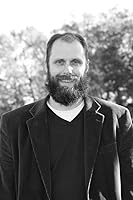
Benjamin Riggs
Riggs seems like a
neat guy...
Our disagreement comes down to this: I am a supernaturalist and, so far as I can tell, Riggs is not. Where I want to argue that the body (and the mind) are images which have value in themselves, to which even more is added by the fact that they also point beyond themselves to God, Riggs seems content (and insistent) to say that the body points to itself alone. He he has found God in the body but seems to have concluded that God cannot therefore exist outside the body. As a result, his treatments of Jesus (chapter 8) and myth (chapter 7) suffer significantly. Where I believe that myth is an image of transcendent Truth clothed in particularities of history, culture, and story, Riggs claims "The primary function of myth is to move beyond the surface and penetrate our inmost core, laying bare our human nature" and so, his reading of myth focuses on the wrapping and mistakes it for the substance within. 

So too, when Riggs turns to talk about Jesus, he dismisses all accounts of the supernatural as literary and poetic licence (oversimplifying the text and thereby making the equal-and-opposite mistake of the fundamentalist who insists on an entirely literal reading of the bible). The result is a Jesus of Nazareth who is no more or less divine than any human person and who works well as a model, and maybe even savior-by-example, for us but not at all as a friend, or Lord. At the risk of sounding too damning, Riggs knows a good deal about Jesus but doesn't even claim to know Jesus. In fact he worries that those of us who do make such a claim, are committing the idolatry of worshiping that which is outside of ourselves (Jesus) in place of the divine within ourselves. My only real response to him there is a total acceptance of the accusation. I have given my allegiance to Jesus as external to my own being.

Bringing it all together


My final characterization of Finding God in the Body is that, while it contains a useful, and even necessary corrective to the culture and Christianity of our day, the book ultimately suffers from a pendulum like over-correction based in Riggs' rejection of the transcendent. He has read his Joseph Campbell but not his C.S. Lewis and J.R.R. Tolkien; he has recognized myth but not realized that it might be fact at the same time. Ultimately I would argue that Finding God in the Body represents an important voice in the conversation about spirituality, philosophy, and being, and we are the richer for having Riggs as a part of it, but he has missed the main thing and his work suffers for it.  

Disclosure of Material Connection: I received this book free from the author and/or publisher through the Speakeasy blogging book review network. I was not required to write a positive review. The opinions I have expressed are my own. I am disclosing this in accordance with the Federal Trade Commission’s 16 CFR,Part 255.